Get the News in Your Inbox
Wake up to breaking news that impacts you. Get Public Power Current — published every Monday, Tuesday, Wednesday, and Thursday — with exclusive news and features on federal policy, regional and state initiatives, and stories from public power utilities across the country. All employees and board members of APPA member organizations can sign up.
Recently in Public Power Current
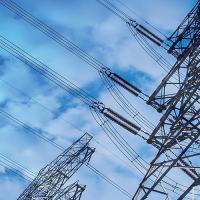
The North American Electric Reliability Corporation is seeking Federal Energy Regulatory Commission approval of proposed Rules of Procedure revisions that add two new functional entities to the NERC registry criteria -- Computational Load Owner and Computational Load Operator. “Through this proposal
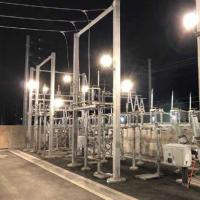
The City of Gardner, Kansas, is making important investments in its electric system through infrastructure maintenance and system expansion projects designed to improve reliability and support future growth, the Kansas Municipal Agency and the Kansas Municipal Gas Agency reported in their fourth

Gallatin Department of Electricity General Manager Mark Kimbell has announced plans to retire Aug. 20, 2027, concluding a 44-year career in public power marked by significant growth at GDE, industry leadership and a commitment to preparing both the utility and the people around him for the future

The Metropolitan Water District of Southern California has maintained strong credit ratings from the nation’s leading credit rating agencies, reflecting Metropolitan’s sound financial management, strong liquidity and disciplined long-term planning as the district fulfills its essential role in

Effective October 1, Texas public power utility Austin Energy increased the Value of Solar rate by 27%, adding hundreds of dollars in potential annual solar bill credits to participating customers. The Value of Solar rate is the bill credit customers receive for energy generated by their on-site
Voltus, a distributed energy resource platform, and Google on Oct. 22 announced an expanded agreement to build a 1 gigawatt virtual power plant in the PJM grid region. In June 2026, Google and Voltus signed an initial agreement to deliver 100 megawatts of flexible power capacity in PJM. The Oct. 22

The Nuclear Company on Oct. 21 announced Prosperity One, a proposed nuclear energy campus in Lewis County, Kentucky, that could accommodate up to six Westinghouse AP1000 reactors generating approximately 6.6 gigawatts of electricity. Located along the Ohio River in eastern Kentucky, the proposed

A report released on Oct. 22 by Democrats on the Senate Finance Committee shows that 2,645 returns earned $2.5 billion in direct pay tax credits in 2023, and 2024, the first two years in which tax credits were available. Direct payment -- also known as elective payment -- of tax credits to tax