Get the News in Your Inbox
Wake up to breaking news that impacts you. Get Public Power Current — published every Monday, Tuesday, Wednesday, and Thursday — with exclusive news and features on federal policy, regional and state initiatives, and stories from public power utilities across the country. All employees and board members of APPA member organizations can sign up.
Recently in Public Power Current

The Delaware Municipal Electric Corporation's Lineworker Training Program recently received the American Municipal Power Employee Engagement and Workforce Advancement Award. The award recognizes investment in employee training, apprentice programs, and professional development to build the next

Minnesota public power utility Austin Utilities announced the commissioning of the new Murphy Creek Substation, a major infrastructure investment that will enhance electric system reliability. As the first substation built by Austin Utilities in 30 years, the project represents a significant

The Nuclear Regulatory Commission recently finalized a rule allowing applicants to use relevant analyses, test data and other information from U.S. Department of Energy or U.S. Department of War reactor demonstration programs to support commercial reactor license applications. The rule is designed

Open configuration options Open configuration options Open configuration options Open configuration options Open configuration options Open configuration options Open configuration options Open configuration options SPONSORED ADVERTISING FEATURE The use of texting has boosted the ability of
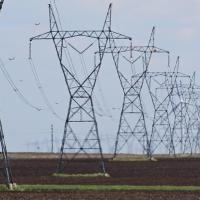
Grant PUD is soliciting proposals under its 2026 All-Source Request for Proposals, seeking competitive offers to supply up to 360 MW of capacity to serve a growing customer base, maintain resource adequacy, and meet its obligations under the Western Resource Adequacy Program (WRAP). This capacity

Doug Lyles has been named General Manager of Texas public power utility Bryan Texas Utilities, the City of Bryan said on Oct. 22. BTU has been in a period of transition after longtime general manager Gary Miller announced his retirement this summer. Lyles was named Interim General Manager at the
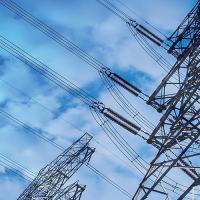
The North American Electric Reliability Corporation is seeking Federal Energy Regulatory Commission approval of proposed Rules of Procedure revisions that add two new functional entities to the NERC registry criteria -- Computational Load Owner and Computational Load Operator. “Through this proposal
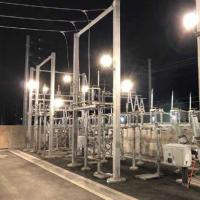
The City of Gardner, Kansas, is making important investments in its electric system through infrastructure maintenance and system expansion projects designed to improve reliability and support future growth, the Kansas Municipal Agency and the Kansas Municipal Gas Agency reported in their fourth