Looking for research and development projects made possible through DEED grants and scholarships? Check out the DEED Project Database.
Trying to find information about specific public power utilities? If you are member, check out the Public Power Directory.

This report summarizes a six-month effort to better understand the role that energy storage technologies can play in enabling public power utilities to lower barriers to energy storage integration with...
October 18, 2022
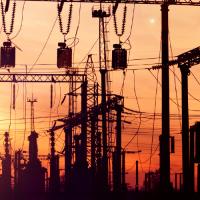
The costs to interconnect wind, solar and storage projects in the Midcontinent Independent System Operator (MISO) region have nearly doubled and, in some cases, nearly tripled over the last 18 years, according to a study by the Lawrence Berkeley National Laboratory.
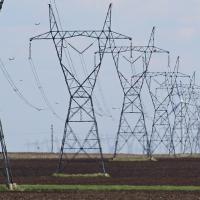
Citing the uncapped nature of tax credits and attractiveness of economics, investment firm Credit Suisse is estimating that the ultimate public climate spending enabled by the Inflation Reduction Act (IRA) could be over $800 billion.

Washington State’s Chelan County Public Utility District and Puget Sound Energy recently announced a new contract for renewable hydropower from two PUD hydro projects on the Columbia River.

The Arizona municipalities of Gilbert, Mesa, Phoenix, Scottsdale, and Tempe have joined forces with the Salt River Project to help pay for bioenergy that supports strategic forest thinning across the Salt River and Verde River watersheds.
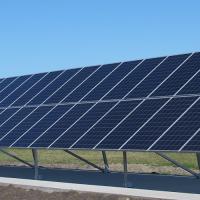
Illinois park districts can enter into agreements for solar energy after Illinois Gov. J.B. Pritzker signed legislation into law in late June.
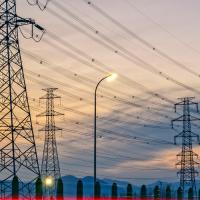
The Southwest Power Pool on July 12 reported that it has reached the halfway point in clearing the backlog of requests to study the impacts of connecting new generating resources to the region’s power grid.
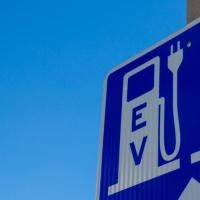
The U.S. Department of Transportation, in collaboration with the U.S. Department of Energy and the Joint Office of Energy and Transportation, on July 12 released a free technical resource to help larger communities take advantage of federal funding for electric vehicle charging stations and other forms of electric transportation.
Elective pay tax credits ensure that tax-based federal energy incentives are available to all electric utilities. Without elective payment, local communities pay for projects through power purchase agreements, but banks and large corporations get the tax benefits instead. Elective pay gives public
February 12, 2025