
Utah Associated Municipal Power Systems and NuScale Power announced on Nov. 8 that they have mutually agreed to terminate a small modular reactor project called the Carbon Free Power Project.
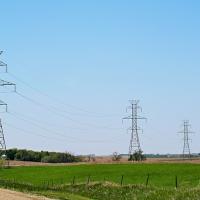
A grid security roundtable exercise held over the summer at NORAD in Colorado Springs, Colorado, resulted in a robust series of key takeaways including that the Department of Defense should work with Sector Risk Management Agencies and the Department of Homeland Security’s Cybersecurity and Infrastructure Security Agency to further enhance ongoing resilience efforts across critical infrastructure, a recently released report said

Members of the American Public Power Association’s Mutual Aid Committee and APPA officials including APPA President and CEO Scott Corwin in late October met to discuss a wide range of topics related to coordination of mutual aid activities among public power utilities in the wake of major power outages.

Senators Bill Cassidy (R-LA) and Lindsey Graham (R-SC) recently introduced legislation that would impose a fee on certain imports, including energy products, into the U.S. based on the pollution intensity of production as compared to domestic production.
Delorean Power LLC and Massachusetts public power utility Groton Electric Light Department on Nov. 8 unveiled two battery energy storage facilities. One project will be located at a GELD substation, while the other one will be located on the grounds of the town’s newly constructed elementary school.
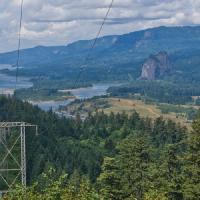
Voters in Maine on Nov. 7 rejected a ballot proposal that would have replaced investor-owned utilities in Maine with a statewide, consumer-owned utility called Pine Tree Power.