
As development of large data centers continues, efforts to protect people and communities from feeling the effects are occurring at the federal, state, and local levels.
In March, President Trump announced the voluntary Ratepayer Protection Pledge, a nonbinding agreement signed by major tech companies where they committed to build or supply their own electricity for data centers. As of April 2026, 27 states are advancing state-level data center legislation that would require developers to cover data center energy costs or report usage. Three other states — California, Ohio, and Utah — have already enacted laws related to data center development.
The aim in these initiatives is to find a balance in which data center development does not drive up the cost of electricity for consumers. Other measures aim to also protect grid reliability or mitigate environmental or other community impacts.
At the local level, public power utilities are navigating how to serve new large loads while upholding their commitment to affordability and meeting the needs of existing customers. This involves a balance between accommodating economic development while protecting rates and ensuring reliability. Local actions include developing policies for new large loads, informing state legislation, and stepping back to examine potential effects and opportunities for development, including issuing moratoria on new development.
Protecting the interests of their communities and ensuring arrangements with data centers are negotiated in ways that are fair and sustainable often involves a case-by-case evaluation and depends on the utility and its unique resource and risk profile.
Supporting Long-Term Growth
Kansas City, Kansas, has long been an industrial hub serving a historic manufacturing base. The region’s industrial sector is still thriving and now includes national tech companies and smaller startups. This legacy of serving large load customers has made the Kansas City Board of Public Utilities well qualified for negotiating fair contracts with new data centers.
The public power utility has taken a measured and practical approach to incorporating data centers. These have included provisions that protect existing customers from shouldering the costs if any of these data centers abruptly close after establishing themselves as large purchasers of electricity generation.

Such stipulations are designed to prevent the kind of economic aftershocks the city experienced when industries withdrew from the area in the past. “We don’t want to go back to the aluminum smelter days, which were quite punitive on some communities,” said BPU Chief Financial Officer Andrew Ferris. “So, these measures are built to say, ‘We hope you’re going to be here long term, but if by chance you’re not, then I’m going to have enough collateral in the bank to unwind my positions in a meaningful way that allows you to exit while cushioning any detrimental impact.’”
BPU General Manager Jeremy Ash noted these measures are being put in place out of respect not just for the individual residents of Kansas City, but for the industrial and commercial customers who have maintained long-term investments in the region.
“Consumer protection is a major priority for our leadership team. Our philosophy is that core business and industrial customers have been largely responsible for building out the system we have today. So, we’re asking ourselves how we make sure they’re maintaining their equitable share, and that we’re not taking this investment they’ve made over the long term in our community and making it available for somebody new to jump in and out,” Ash said.
BPU emphasized the importance of setting policy that makes room for new economic development while recognizing that a public power utility’s foremost goal is to ensure the broader well-being of the community it serves.

“The number one theme is to be cautious. Don’t set yourself up for long-term failure out of a short-sighted pursuit of revenue potential. Speed of the market is important, but so is protecting your community,” Ash said.
He noted the importance of evaluating the consumption patterns of various types of data centers to determine what the grid can handle. “Each of these data centers have nuance to them. An AI data center is different than a hyperscale data center. Understanding that they function in different ways can better position you to protect the grid from voltage issues.”
Ash recommended treating prospective data centers like any other customer and doing due diligence in understanding the true cost they will have on the system. He said BPU does not offer any economic development incentive or discount for new data centers. “We still see them as meaningful customers, like all of our customers, and because of this we want to make sure that they’re paying their fair share.”
Amber Oetting, director of communications at the BPU, characterized the utility’s approach as “building a best practice playbook” so that public power utilities navigating similar questions around data centers can learn from their experience. “At the end of this, our goal is to have gone through the process consciously so we have built a road map other utilities can follow.”
Ensuring Community Benefit
Nebraska has recently become a prospecting area for data center companies drawn by the state’s inexpensive real estate and affordable power, with Meta siting near Omaha one of the largest data center campuses in operation in the U.S.
The Nebraska Public Power District is the largest electric provider in the state and has customers spread across 84 of the state’s 93 counties, spanning rural areas to midsized cities like Kearney.
NPPD took a forefront role in supporting and informing the design of LB 1261, a state bill passed into law on April 14, 2026, that ensures data center customers take responsibility for building and maintaining the energy infrastructure needed to serve them. Notably, the law shifts 100% of the financial burden for constructing new energy generation to these large-load customers while obligating them to sign long-term contracts with the local public power district.

NPPD President and CEO Tom Kent noted this bill was passed at an especially transformative time for the public power utility, which serves the state’s more rural areas, since data center developers have shifted their prospecting away from larger cities. “Of late, the hyperscalers have gotten more interested in rural Nebraska, which wasn’t a primary target until maybe the last six months.” He also noted rising interest from smaller data centers that are anticipating demand of less than 100 megawatts, even those as small as 5 MW.
Kent said data center customers are drawn to Nebraska because “public power is generally thought of as easier to work with and can be more responsive because we often have less regulatory hurdles.”
NPPD remains attuned to the feedback of its customers, which Kent said has recently become more mixed about data center construction and has included increased concerns around potential effects on water quality and availability as well as electric rates.
On the other hand, Kent recognized potential community benefits from data centers, including that “they can add a lot to the property tax base, which is important for funding roads and infrastructure.”
NPPD took a proactive role in speaking with the governor and governor’s staff over the last year about what it had been hearing in its communities and whether there might be any forthcoming legislation related to large loads.

The governor’s office shared a draft of a large-load bill with NPPD in December 2025. NPPD worked closely with state legislators to “come up with something that would allow private investment for generation projects greater than 1,000 MW that we can structure in a way that would protect public power legacy customers and allow for additional economic development,” said John McClure, executive vice president of external affairs and general counsel at NPPD.
McClure worked to ensure these included stipulations to protect the status of public power in Nebraska, such as “if a greater than 1,000-MW generation facility would be installed, it has to be done very cooperatively and collaboratively with the local public power entities, and that the local public power utility will still be the retailer to that load.”
“The fact that we are tied closely to the community and exist to serve the community helped facilitate the kind of dialogue and discussion needed to work on these challenging issues,” Kent said.
Pausing for Policy
Data centers view the Pacific Northwest as a prime development area due to its abundance of reliable and affordable power. These same assets, particularly Washington’s hydropower resources, have also been a longstanding boon to the region’s public power utilities.
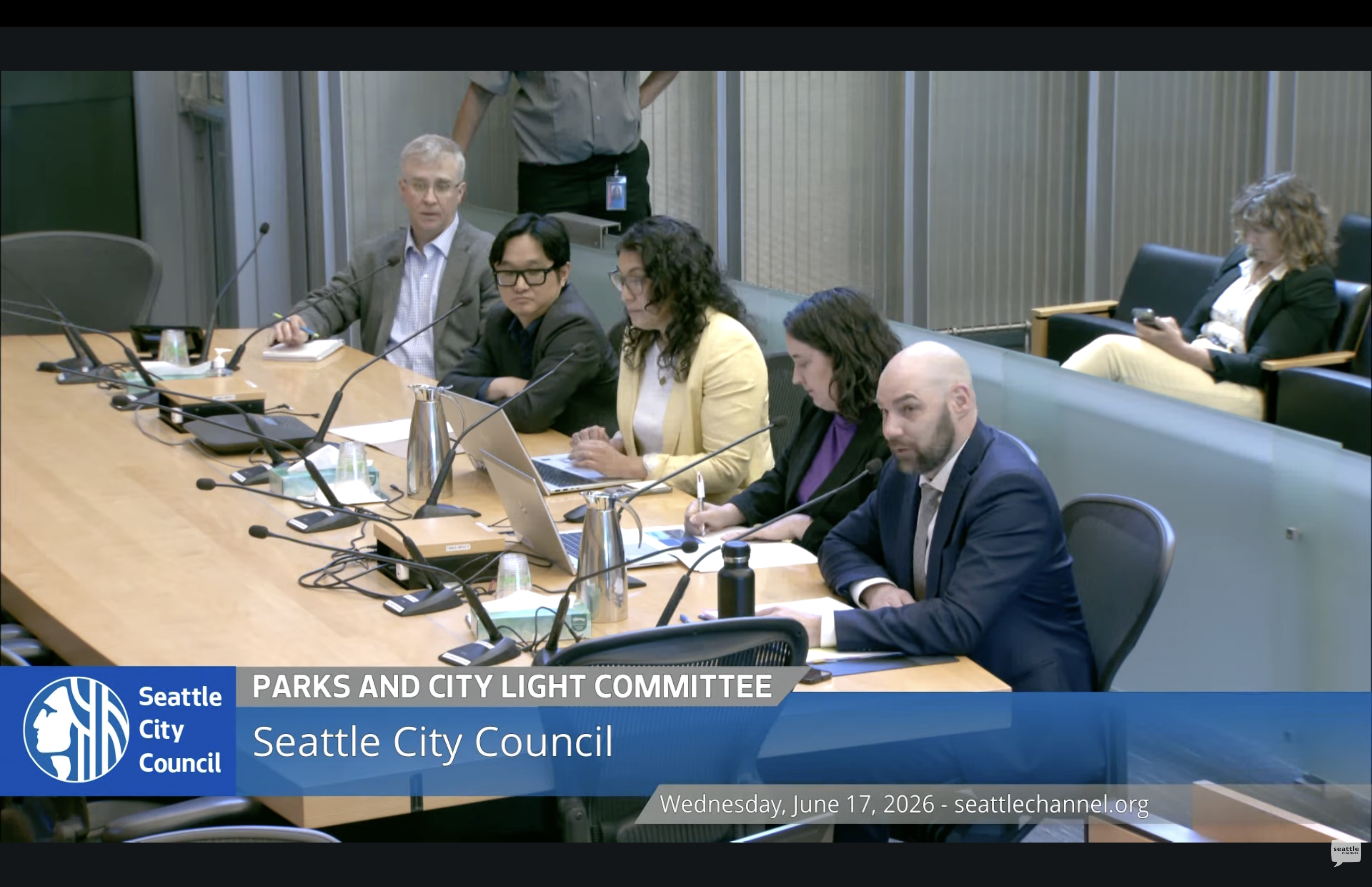
After receiving a deluge of community feedback, Seattle City Council set a one-year moratorium on siting new large data centers in Seattle. At the same time, Seattle City Light announced a new large load policy.
Jeff Wolf, Seattle City Light legal affairs advisor, said broader community concerns around data center development have increased over the past year.

“At a recent City Council meeting, residents spoke in favor of a proposed one-year moratorium on the development of new or expanding data centers of more than 20 MW. Attendees expressed concerns about the consumption of electricity and water associated with data centers, the associated strain on infrastructure, noise and heat that could negatively impact health, the safety of drinking water, and the foreseeable impact on utility rates and the economy,” he shared.
Seattle intends for the moratorium to allow its city officials time to “identify what mitigation measures and community benefit policies, if any, would be most appropriate to address the impact of locating new or expanded large-scale data centers.”
Wolf explained City Light’s policy is designed to ensure the costs of data centers aren’t shifted onto the utility’s existing customers.
“Serving new large loads can require expensive wholesale power purchases and major infrastructure investments. City Light designed its new large load policy to ensure new or expanding large data centers bear their own energy and infrastructure costs, rather than shifting them to other customers,” Wolf said.
The data center interest is happening concurrent with load growth from electrification and other end uses. This includes larger buildings in the city aiming to meet a performance standard to become net zero by 2045, which has driven the installation of electric heat pumps.
City Light is also transforming from managing a winter peak into a dual-peaking utility, as more residents are getting air conditioning due to increasingly warmer summer months. This runs up against summer being a comparative low point for the region’s hydro production, requiring City Light to plan its power purchasing and generation profile around these constraints. Wolf emphasized that Seattle is committed to following state-level legislation like the Clean Energy Transformation Act that are supported by its customers, with the utility remaining “very conscious that as we increase our load requirements, we acquire new power that is based on a renewable energy.”
The New Large Data Center Load Policy was drafted following significant feedback from customers.
The resulting policy is slated to contain five core provisions designed to address these concerns: a new rate class for customers over 10 MVA, cost-based rates that reflect the incremental cost of procuring the associated power, a service agreement where large load customers accept full financial responsibility for the infrastructure and related costs for the life of the contract, as well as corresponding service queue and demand response measures that ensure Seattle’s existing customers receive power promptly and at fair rates.
Wolf noted that these measures are designed to be both structurally responsible and fulfill Seattle City Light’s abiding mission to provide reliable and affordable power while also leaving room for new data center construction that upholds, rather than compromises, these priorities.
“Ultimately, the large load policy is driven by both an eye for affordability and an overall respect for the people of Seattle,” Wolf said.