
The Southwest Power Pool on April 2 celebrated the successful expansion of its service territory into the Western Interconnection of the nation’s power grid.
"The milestone makes SPP the first regional transmission organization (RTO) with services spanning two interconnections, positioning its member organizations to reap benefits from an operationally and geographically diverse integrated system," it said.
Following months of intensive testing, simulation, and joint operational coordination with dozens of participating utilities, SPP’s expanded RTO operations officially began at midnight central time on April 1.
Nine load-serving utilities led the expansion, which extends SPP’s service territory to include resources and customers of numerous utilities in seven states – Arizona, Colorado, Montana, Nebraska, New Mexico, Utah, and Wyoming. A number of public power utilities are participating in the expansion.
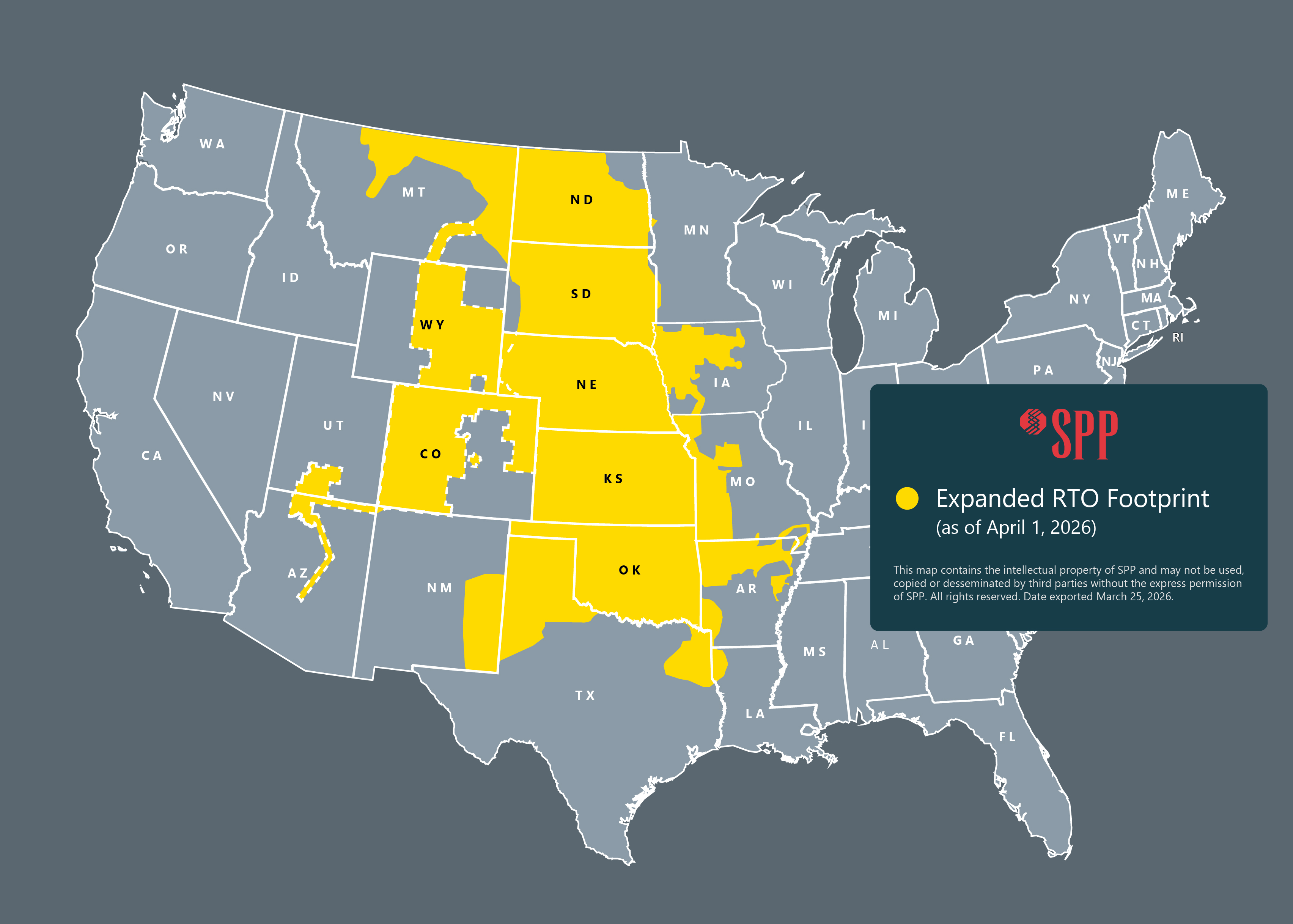
"As RTO members and participants in SPP’s wholesale market, they will gain access to the RTO’s vast portfolio of generating resources, innovative planning services, and support in coordinating electric reliability," SPP said.
“SPP’s western expansion is a landmark milestone for our organization, our new members, and the broader energy industry,” said SPP President and CEO Lanny Nickell. “This is one of many bold steps we’re taking to deliver long-term value to more consumers.”
Participation in SPP’s RTO is expected to "deliver the same advantages the organization has demonstrated across its central U.S. footprint for decades, including enhanced reliability, lower wholesale energy costs through regional dispatch, transparent and independent grid governance, and efficient planning that supports economic growth," the grid operator said.
"Operating as a coordinated system will strengthen real time situational awareness across a wider geography and enable the region to maximize diverse generating resources, navigate weather events and other threats to grid integrity, and optimize the use and planning of the region’s transmission network. These benefits will continue to grow as new members integrate into SPP’s planning processes, markets, and reliability toolset."