Missouri public power utility Chillicothe Municipal Utilities has repaired and returned a 40 megawatt gas-fired, dual fuel twin turbine generation unit back into service.
In an interview with APPA, CMU discussed the work that went into bringing the turbine back online and its expected benefits for generation capacity and rate stabilization.
CMU serves over 4,500 customers within the greater Chillicothe area.
The utility initially took the unit back offline in 2020 over concerns around the integrity of its rotor, with initial cost-benefit analysis around the benefits of bringing the unit back online versus the price of repairs leading the utility to temporarily keep the generator out of commission.
“We got some budgetary numbers of what they thought it was going to take to repair it, which was estimated around $2-3 million at the time based on standing level of capacity payments. There just wasn't a return on investment,” said Casey Johnson, CMU operations manager.
As Johnson explained, changing capacity markets and the need for reliable generation have increased the unit’s structural value while lowering the cost of repairs. The utility also chose to retain the generator’s operating permit, reducing the financial demands of bringing it back online.
Load growth over the past half-decade created an impetus to bring the unit back into service, with the regional power purchasing group - Missouri Power Energy Pool (MOPEP) - forecasting they would be nearing capacity by summer 2026.
“We're part MOPEP, which is the group here in Missouri. They were showing a need for capacity, and this was very cost-effective capacity to get online versus building a new plant. It wasn't just for us in our town, it was for all the members of the purchase power group,” said Matt Hopper, CMU general manager.
This set a timeline CMU worked diligently to follow, with the utility creating a financing plan and project outline that allowed them to bring the unit back into operation. As Hopper explained, the need for additional generation allowed the utility to negotiate a financing agreement with MOPEP where the power purchasing group provided a $1 million loan that would be paid back via energy credits while the utility covered $1 million through its own reserves.
“It was similar to a financing agreement [MOPEP] had done with another member. So the decision was made that we were going to finance the first million and if it got beyond that, it was going to get into our reserves,” Hopper said.
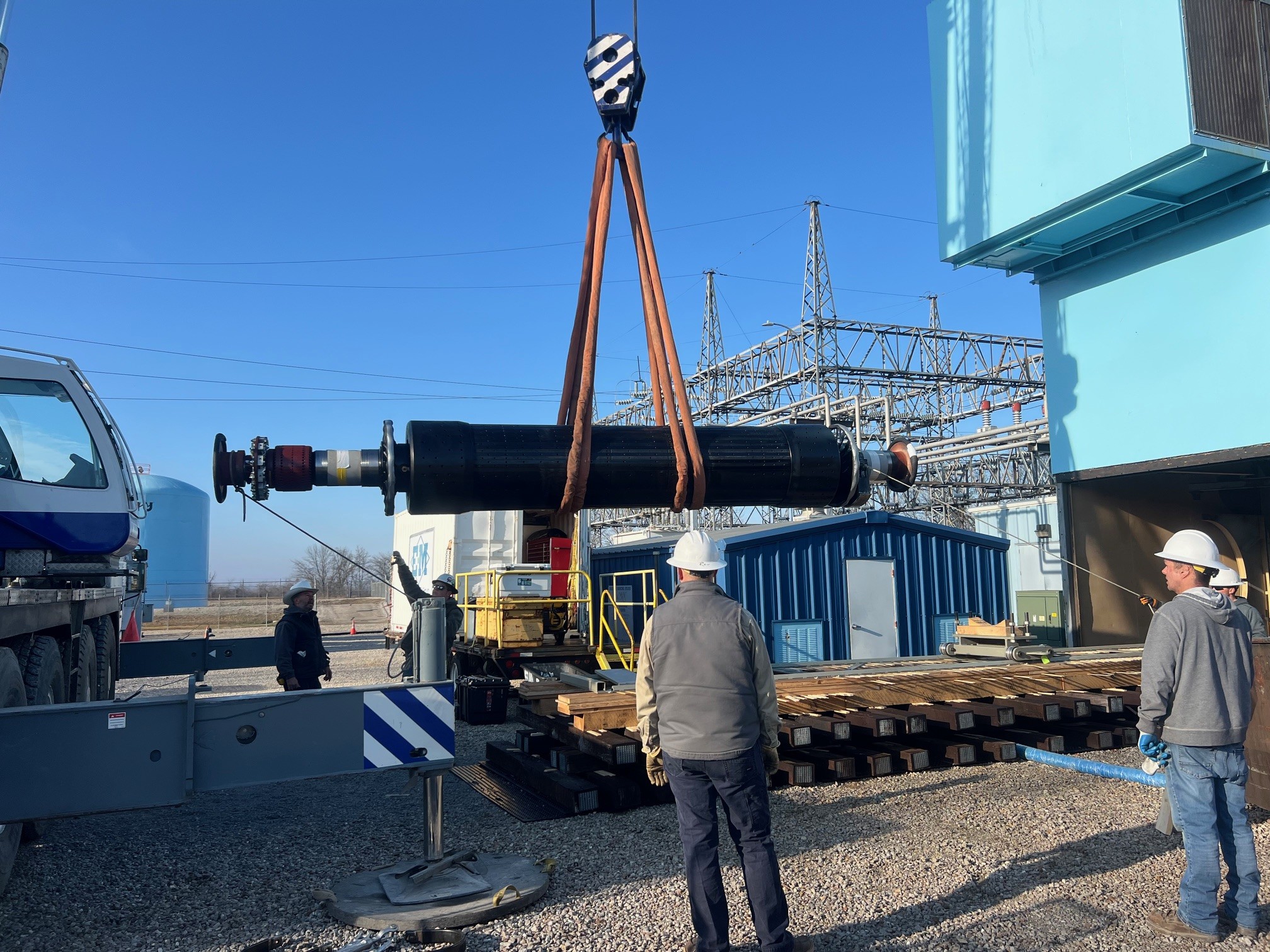
CMU then rallied its staff around a reconstruction plan that would address the repairs needed to bring the generating unit back online, one that entailed full cross-departmental collaboration. This included significant pre-planning that allowed the utility to prioritize order of repairs in ways that shortened the project timeline, as well as weekly meetings to track progress that ensured repairs continued apace.
“Our employees here went above and beyond trying to get everything up and going. We had different departments pulled in, it was a full group effort… We didn't want anything to fall through the cracks and wanted to be diligent and thorough on every aspect of this job. What kept us on task were brainstorming sessions where we looked over every facet of this reconstruction,” Hopper said.
CMU also took a responsible and proactive approach to addressing other areas of structural maintenance before repairs on the rotor itself commenced.
“While waiting on rotor repairs to occur, utility employees took advantage of the downtime to replace the Unit 1 motor control center, have new exhaust stacks built, upgrade liquid fuel systems, replace inlet air filters, upgrade vibration monitoring systems, and any other system checks needed for a unit that had not been in service for five years,” Hopper said.
This level of diligence brought the generator online three months before MOPEP would have likely hit capacity limits, with the unit returning to service at the start of March. The end result has been maintenance of affordable rates within both Chillicothe and the greater MOPEP power purchase area.
“With the added capacity from Unit 1, CMU customers should enjoy stable rates for some time. Additionally, the 40 megawatts of capacity for our power pool should help keep costs down for all 35 member municipalities,” Hopper said.