
Looking for research and development projects made possible through DEED grants and scholarships? Check out the DEED Project Database.
Trying to find information about specific public power utilities? If you are member, check out the Public Power Directory.
The PUD will supply the hydrogen for the demonstration project from an electrolyzer slated to be completed in 2021.
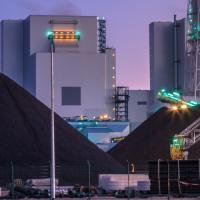
Management at Florida public power utility Orlando Utilities Commission on Oct. 14 released a recommendation to significantly reduce the use of coal by the utility no later than 2025 and eliminate it no later than 2027.

Jolene Thompson recently detailed her goals as President and CEO of American Municipal Power (AMP), how AMP and its members have successfully responded to the COVID-19 pandemic and what she is focused on in terms of her responsibilities as chair of the American Public Power Association’s Board of Directors.

The U.S. Department of Energy has approved a multi-year cost-share award of $1.355 billion to a new special purpose entity wholly owned by Utah Associated Municipal Power Systems (UAMPS) for the development and construction of the Carbon Free Power Project, which will be the first NuScale small modular nuclear reactor (SMR) project in the U.S.


Every home, store, factory, office building, and hospital pays a regular bill for electricity. The cost of electricity that appears on the bill depends on a complex set of variables that are different across the country. Electricity rates are set at a level to recover the utilities’ costs, including
The start of the new year ushered in the legalization of recreational marijuana in California, the latest marker in a growing trend of states moving to legalize cannabis use. The power industry has been grappling with several challenges associated with cannabis operations including the collection of

The Massachusetts Municipal Wholesale Electric Company reported that it recently paid its bondholders $45 million in principal and nearly $1 million in interest, bringing the outstanding debt on MMWEC’s power supply projects down to $10.68 million.
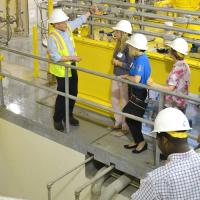
Ohio-based American Municipal Power Inc. on Sept. 6 announced the completion of its recent hydropower development effort, which AMP said is the largest of its kind in the U.S.
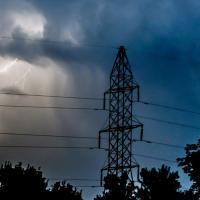
Everyone on the Virgin Islands, and most electricity customers in Puerto Rico, appeared to be in the dark on Thursday, Sept. 7 after Hurricane Irma passed through the islands. As damage assessments began on those islands, people and power companies in Florida and other areas of the East Coast watched the Category 5 hurricane apprehensively as it moved closer to the U.S. mainland.