Get the News in Your Inbox
Wake up to breaking news that impacts you. Get Public Power Current — published every Monday, Tuesday, Wednesday, and Thursday — with exclusive news and features on federal policy, regional and state initiatives, and stories from public power utilities across the country. All employees and board members of APPA member organizations can sign up.
Recently in Public Power Current
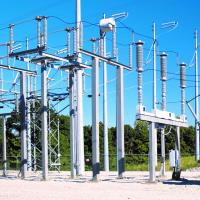
New York Gov. Kathy Hochul on Oct. 22 announced that Niagara Power Transformer, a Buffalo manufacturer of transformers essential to the operation and modernization of the electric grid, has broken ground on a more than $71 million expansion that will increase its production capacity by 50 percent

A bipartisan group of 29 members on Oct. 23 sent a letter to Speaker Mike Johnson (R-LA), Minority Leader Hakeem Jeffries (D-NY), House Armed Services Committee Chairman Mike Rogers (R-AL), and Ranking Member Adam Smith (D-WA) urging them to attach the Fix Our Forests Act (FOFA) to the annual

Nick Lawler, General Manager of Littleton Electric Light & Water Department, has received the 2026 Electricity Information Sharing and Analysis Center (E-ISAC) Electricity Security Service Award in honor of Michael J. Assante. The E-ISAC presented the award to Lawler at GridSecCon, which is the
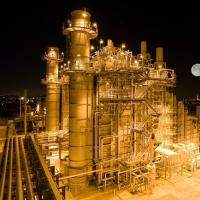
Nebraska Public Power District on Oct. 21 said that it will be adding three additional combustion turbines to the construction of Princeton Road Station, which will have a maximum capacity of approximately 1,411 megawatts, following approval at the Nebraska Power Review Board’s September meeting

JEA lineworkers earned two second-place finishes at the International Lineman’s Rodeo in Overland Park, Kansas, last weekend, the Florida public power utility reported. JEA journeymen Robert Hess, Cody Stokes and Caleb Macabitas secured second-place finishes in two mystery events, involving a 4-kV

As much as 15.2 terawatt-hours of electricity could be generated annually at non-powered dams, according to an updated assessment of hydropower technical potential across the nation compiled by researchers at the Department of Energy’s Oak Ridge National Laboratory (ORNL) and Idaho National
A new $6 million contribution from Google will support a community collaboration led by Omaha Public Power District, working alongside United Way of the Midlands (UWM) and other community partners to support households, organizations and strengthen community resilience. This energy impact funding
The U.S. Department of Energy on Oct. 20 announced approximately $967 million in additional funding through its Grid Resilience State and Tribal Formula Grant program "to modernize critical energy infrastructure, lower electricity costs and strengthen America’s power grid." The funding will support