
Electric utilities are under growing pressure to manage rising demand, strengthen grid reliability, and respond more quickly to outages. At the center of that effort is the utility operations center, where crews are dispatched, outages are coordinated, and grid activity is monitored in real time. To meet these demands, many public power utilities are investing in new operations centers designed to improve storm response, streamline field operations, and support increasingly complex electric systems.
Responsive Operations
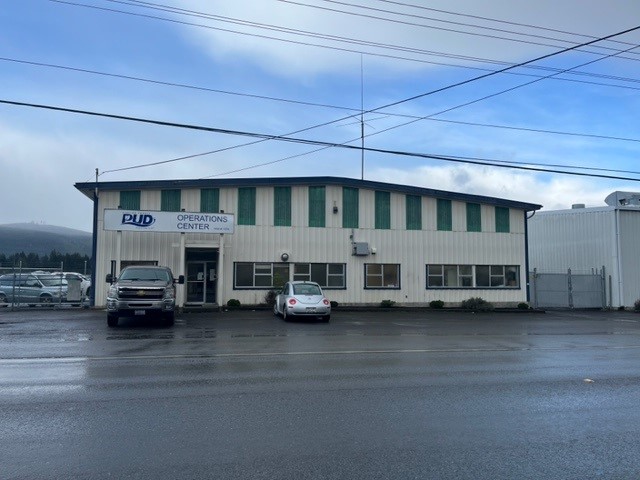
When Clallam County Public Utility District in Washington first opened its Port Angeles operations center in 1966, the utility served about 6,600 meters. Clallam PUD now serves over 28,000 meters and is looking to build a new facility, one designed and outfitted to better suit its current service needs.
Shailesh Shere, assistant general manager at Clallam PUD, said the older building crammed several functions into one space.
“It is a facility that’s owned by Port of Port Angeles and was makeshift-modified over subsequent decades. We’ve made minor modifications to ensure that a level of efficiency is achieved, but it has become markedly inadequate for the needs that we now have in 2026,” Shere said.
Clallam PUD has been proactive in not only planning the structure of its new operations center, but in outlining the utility’s strategic priorities and how investments in a new building will meet them.
“Wildfire mitigation is one of our major concerns looking forward. Our vegetation management crew can’t be fully supported in the ways we need with our current building. The communication that needs to happen between the vegetation management crew and maintenance-aligned crews is not well facilitated because they’re housed in different sections of the complex,” Shere said.
With the current building’s lease set to expire in 2027, Clallam PUD began planning for the new operations center in 2020. The utility ensured that discussion with its board and outreach to its customers were foundational parts of the process.
Shere said that a series of presentations were made during open public meetings not only to gauge the board’s interest in the direction the PUD should go, but also to encourage public education and participation in the decision-making process as early as possible. The board and general manager mailed a letter to all customers outlining the project’s scope and necessity.
“The education piece was the most important thing from the outset, since customers don’t automatically understand the nitty-gritty of what an operations center is and why building a new one is important,” Shere said.
The long planning timeline allowed Clallam PUD to map a financing strategy that avoids shifting the entire costs to customer rates. Shere said the PUD will use about $9 million from reserves and raise the rest needed for the building costs through tax-exempt municipal bonds.
The PUD encompasses a considerable service area, with contrasting terrains that range from a rainforest on its western side with up to 170 inches of rain annually to dry territory in its east end with less than 20 inches of annual rainfall. The new operations facility will be in the center of its territory and will both serve customers in the area and support two other operational facilities on either side.
With the new operations center slated to begin construction next year, Clallam PUD intends to measure its success largely through how much the new facility advances responsiveness. The intent is to “dispatch our line crews as quickly and safely as possible with everything that they need lined up before, during, and after a grid incident, so that outage durations for customers are reduced by a significant amount of time.”
For other public power utilities looking to modernize their operations centers, Shere emphasized how important a proactive approach can be, from aligning the building’s design with the utility’s strategic needs to allowing enough time to map out both financial considerations and potential hurdles well in advance.
“One of the biggest lessons we’ve learned is the importance of early planning and clearly defining how this operations center would function, not just in your daily operations, but also during emergencies. Also clearly communicating and getting buy-in from the Board and the public so you have full support when you start the project,” Shere said.
Resilient Structures, Reliable Service
Huntsville Utilities opened its new operations center in October 2025. Its features marked advancements in both structural soundness and technical capacities to proactively meet the service needs of Alabama’s most populous city.
Chris Jones, Huntsville Utilities’ chief operating officer, credited the idea for an updated operations center to Mike Counts, vice president of operations, who has been with the utility for more than 30 years.
“Our community’s growing, our system’s growing, our system’s getting more complex, and Mike had the foresight to see we were going to outgrow our operations center,” Jones said.
To better understand how an updated operations center could support Huntsville’s growth, utility leaders sought out an inside look at other facilities. Jones recalled how Counts and other utility leaders started by visiting other major public power operations centers in the region, including in Chattanooga, Knoxville, and Nashville in Tennessee, and at an Alabama Power facility.
After both internal deliberations and speaking with other utilities, Huntsville determined that the best course of action was not to expand its existing facility, but to build a new operations center.
The cost of building the new center was evaluated at $34 million, with Huntsville laying out a borrowing and repayment plan that was made feasible by the utility’s yearslong minimization of debts and responsible management of existing capital expenditures.
“We borrowed the money, so that way we had the cash available to pay for our operations center and a few other system improvements over the next 20 years. It was a big enough ticket that our normal capital funding process was going to be pretty stretched, and borrowing seemed appropriate,” Jones said. “Thankfully, we don’t have a lot of debt, so that fit within our financial plan fairly easily.”
As Jones summarized, the new operations center was built with three priorities in mind: “redundancy and security, addressing our future needs, and improving our technology.”
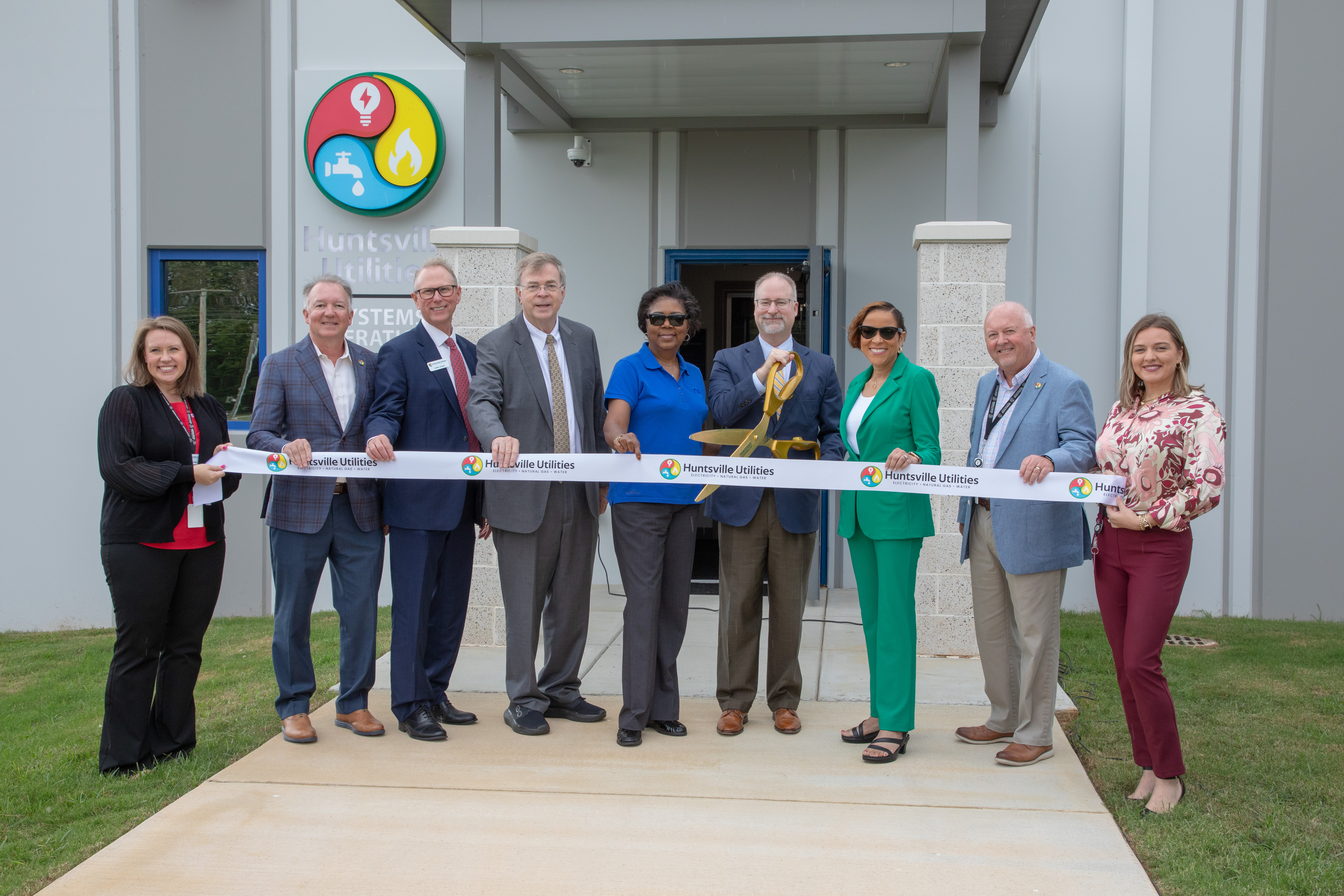
Photo courtesy Amanda Kemp, Huntsville Utilities.
Huntsville contends with an annual tornado season that typically occurs from March to May, and the new facility was reinforced to withstand tornadoes and other natural disasters.
“It’s a concrete structure with a concrete foundation, concrete walls, the doors are incredibly thick, and it has redundant electric feeds, a backup generator, and redundant HVAC equipment. The outside generator is inside a steel cage, so it’s also protected from tornado debris,” Jones said.
He noted that Huntsville weighed whether to build to protect against other threats, such as electromagnetic pulses, but ultimately decided to focus on ensuring the structure can withstand the most likely risks it will face.
Huntsville’s new operations center is also outfitted with an array of monitoring stations that allow the utility to oversee multiple technologies and critical processes within a single hub.
“It can show multiple things simultaneously. It can be divided into our system map, weather surveillance, our outage management system, our SCADA and our system load all at once. It gives our operators a situational awareness that they’ve never had before,” Jones said.
This has shown immediate payoff in terms of incident response and outage management, with Jones noting, “The better integrated your outage management system is, the quicker you can respond to outages.” He added that included developing an integrated radio and phone system all managed within one console.
For utilities looking to build new operations centers of their own, Jones emphasized the importance of a thorough pre-planning process where strategic and operational needs are mapped onto the capacities of the new facility. He also advised planners to seek staff input throughout the process.
“One of the biggest lessons learned is … making sure early on we got our operators involved in some of those discussions about what the layout should look like and how the workspace should flow, because they’re going to be working in there,” Jones said.
Anticipating Community Needs
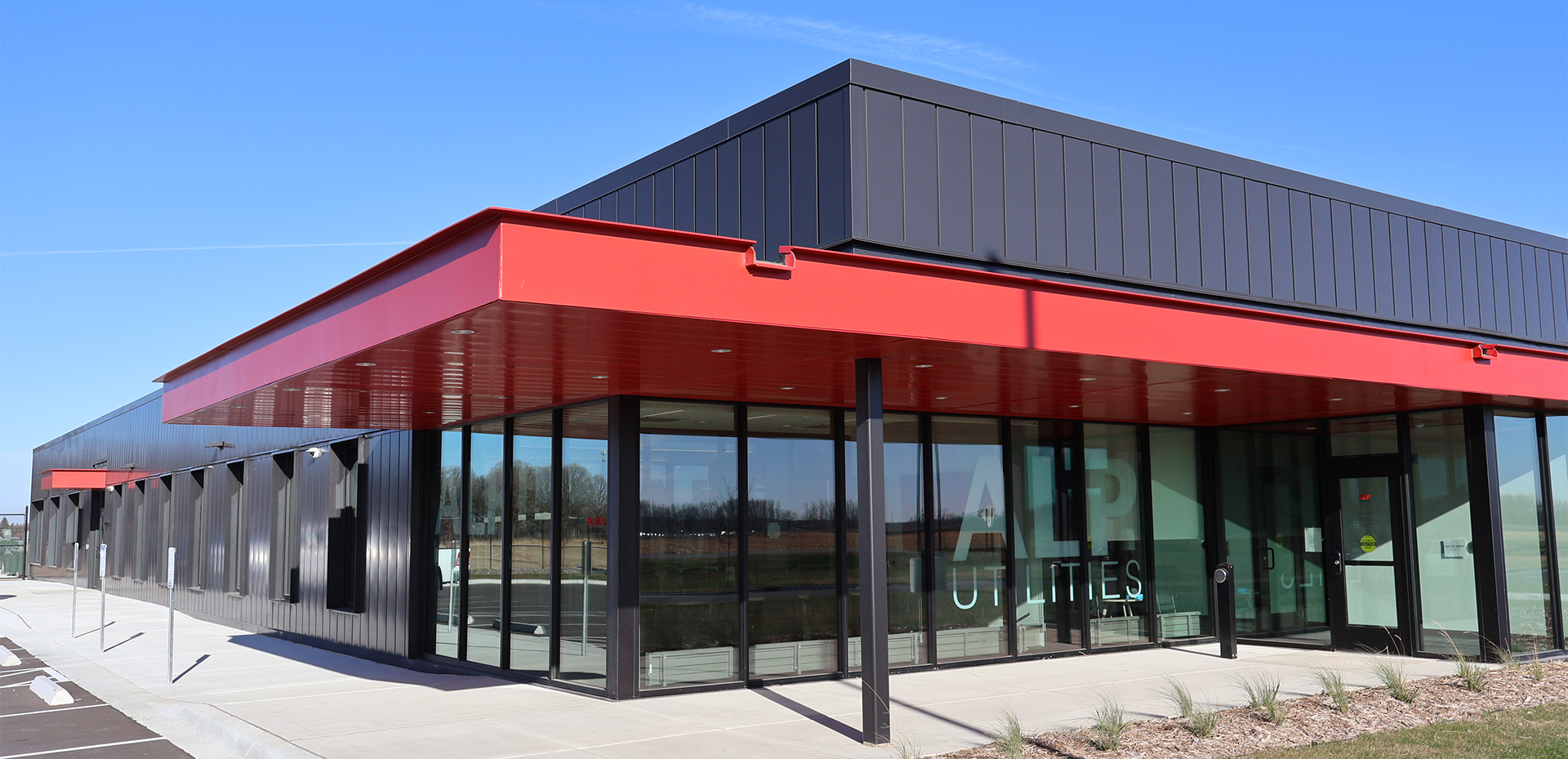
ALP Utilities in Alexandria, Minnesota, opened a new operations center in August 2025. The town’s original facilities first opened in 1967. Like Clallam PUD and Huntsville, Alexandria has grown substantially, with the utility’s customers increasing from 7,000 in 1967 to more than 15,000 today.
Ted Cash, ALP’s general manager, sees the building of the new operations center as a fulfillment of the public power utility’s obligation to meet the demands of a growing community.
“Back in 2019, it was obvious we needed new facilities. The ad hoc nature of municipal growth means you can let growth get ahead of strategy, and so you often make ad hoc improvements rather than lay out a plan that anticipates them wholesale,” Cash said.
ALP staff realized these as-needed buildouts were risking the utility falling behind in responsiveness, with Cash noting that “with our old center, when we needed more operations vehicles, we just built another garage instead of asking how we can figure this out longer-term.”
ALP realized that building a new operations center would be more efficient from both a management and cost perspective, and the utility began laying out a financing plan that used a combination of cash reserves and bond revenue to raise capital without interrupting other projects or shifting costs to its customers.
The broader Alexandria community has been receptive to the center’s development, an outcome Cash credits to ALP’s positive relations with the public, including raising awareness around the role the utility plays in ensuring local quality of life.
“About a year and a half in advance, when we’d have our open house, we’d start talking about the new operations center. We talk about it on the radio and at public-facing events. Alexandria is a fantastic community, and they understand that you have to invest money long term to make sure you’re not degrading your facilities to a point where they go from an asset to a detriment,” Cash said.
He emphasized that ALP mapped out the facility to better consolidate operations within one complex — making it easier to house trucks and dispatch crews — and provide the best possible work environment for staff.
“I don’t want people who come to work to feel like they’re unappreciated. They deserve a good work environment with natural light and a climate they can control. Really make sure that your employees have a workspace that’s conducive to what you’re asking them to achieve,” Cash said.
ALP’s focus on strategic planning and mapping its needs to the building’s design resulted in the operations center being completed $1.44 million under budget. Cash sees multiple lessons other utilities could learn from ALP’s example, particularly the importance of iterative planning, maintaining an eye on long-term development, and ensuring community buy-in.
“Don’t be afraid to take the steps,” he said. “You’re always going to have issues, complications and trials. There might be some people you are not going to win over, but that doesn’t mean you ever stop talking with and sharing your progress and goals with the community at every chance you get.”