
Public power utilities are overseeing projects designed to incorporate new technologies, diversify their supply portfolios, and meet the demands of load growth and electrification. These capital-intensive, yearslong projects rely on sound financial strategies that provide returns that will outpace their upfront costs and mitigate risk to the community.
Amid changes in the costs to develop or procure various resources, market structures affecting the value of grid assets, and tax policies, utility project financing is a complex endeavor. Public power is securing project funding in ways that are sustainable and with an eye toward long-term affordability for their communities.
Leveraging Storage for Affordability
Utility-scale battery storage has made substantial progress in both affordability and capacity over the past few years. Capital costs for developing battery storage are one-tenth what they were in 2010, dropping from $1,400 per kilowatt-hour that year to nearly $140 per kWh in 2024. This decrease has been driven by advancements in technology and ease of integration. As a result, battery storage was the second largest utility-scale capacity addition in 2024, outpaced only by solar.
Public power utilities are finding energy storage increasingly helpful in supporting overall energy affordability for their communities.
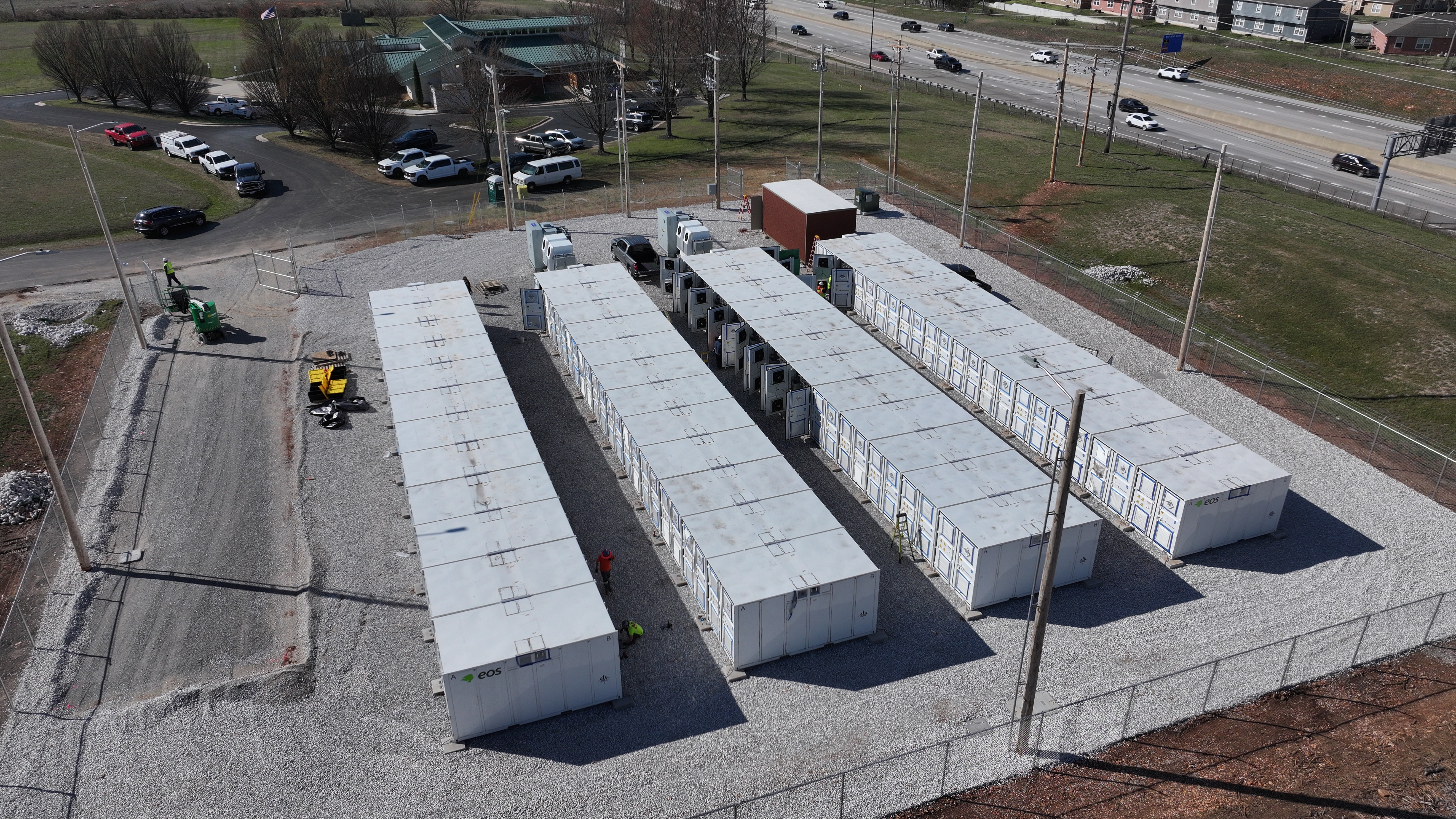
Photo courtesy City Utilities of Springfield.
City Utilities of Springfield in Missouri has worked to mobilize capital behind two successive battery storage projects — a 5-megawatt storage installation near City Utilities’ Blackman Water Treatment Plant and a 31-MW storage system near the James River Power Station that is scheduled to begin construction later in 2026.
As Jeff Parkison, director of financial analysis, explained, the utility laid out a strategy that paired certificates of participation and tax credits with the leveraging of funding from other projects.
“City Utilities issued certificates of participation along with what I would call pay-go. We also paired the two battery storage projects with the construction of a 350-MW natural gas combustion turbine, doing the financing together for that. Since we needed additional capacity, it made sense to pair those together,” Parkison said.
Parkinson noted the battery storage projects cohered with Springfield’s integrated resource plan, which aims to support the financial and structural viability of the city of over 170,000 people, the third most populous city in Missouri.
City Utilities also made the choice to finance the battery projects based on requirements from Southwest Power Pool to increase reserve margins — to 36% in winter and 16% in summer — in part as a precaution driven by major winter storms.
Parkinson said an internal power supply task force put together recommendations based on the SPP requirements, which informed its latest budgeting process.
While City Utilities has staggered its construction timelines, it financed both battery storage locations simultaneously. Parkison noted that one of the most important elements behind raising capital for future projects — and setting a timeline for completion — will involve keeping an eye on federal policy and tax incentives.
“Looking forward, our eyes are on the Fed. We were certainly happy that we got the financing completed when we did, especially since we saw changes over the past year to direct pay credits. Thankfully none of those changes so far will materially impact us, so we’re focused on completing these projects to meet the deadlines that are within existing legislation,” Parkison said.
The Right Timing
Over the past decade, the Indiana Municipal Power Agency has developed numerous solar parks across its service area — totaling 54 installations that together have 210 MW of capacity as of February 2026.
IMPA President Jack Alvey said when the joint action agency first began financing and building the solar parks in 2014, using internal cash reserves made the most sense.
As IMPA Chief Financial Officer Chris Rettig explained, the decision to use cash funding was largely a practical one, since each solar park typically comprised 1-MW to 10-MW capacity.
“Given the relatively small size and capital investment, cash funding was [the] most logical and least-cost option with no real negative impacts to the agency's cash flows,” Rettig said.
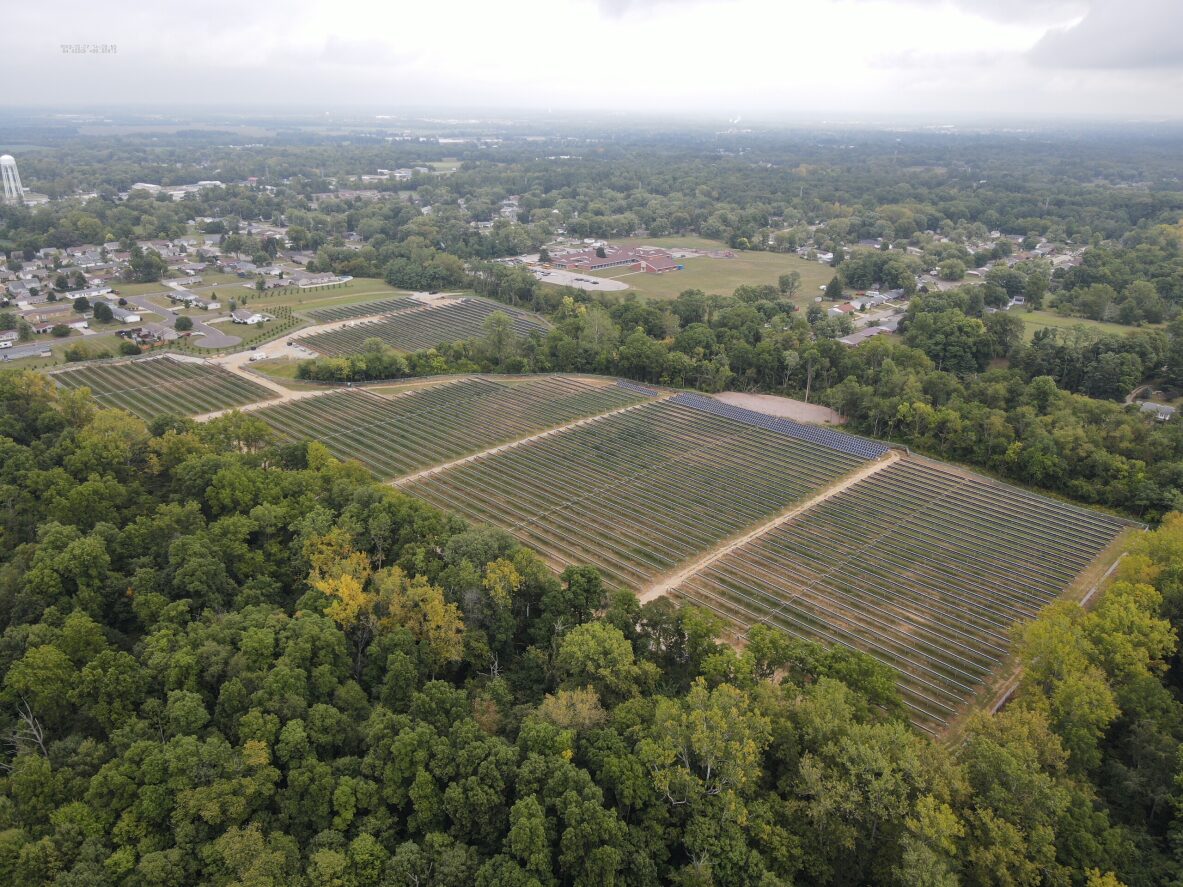
Alvey said IMPA also explored partnership deals with tax equity partners for some of its solar parks to help reduce the cost of construction and to gain access to federal tax incentives. In those arrangements, IMPA designed and built the parks, lending part of the cost of the construction to the tax equity partner, before selling to the equity partner. IMPA then purchased the power from the parks for several years and collected principal and interest from the construction loan. “All in all, this helped us reduce the cost of the park, and we feel we got 50% of the investment tax credit value by doing it that way,” he noted.
These contracts included the right for IMPA to purchase the parks back after five to six years, which it has.
With the inclusion of elective or direct payment provisions in the Inflation Reduction Act in 2022, IMPA's financing strategy for the parks changed again.
With direct access to the investment tax credit, or ITC, IMPA again used cash to develop 11 solar parks from 2023 to 2025 and has been filing returns with the IRS to get the full value of the credit. Alvey said his team analyzed options to determine what would deliver the most value for IMPA and its member communities.

“It was not that hard of a decision to make … if our competitors are getting them because they’re taxable, we felt that we should get the same value because our customers are paying federal taxes. So, why should our customers be treated differently than a taxable entity’s customers?” Alvey said.
IMPA also weighed whether the ITC or production tax credit would deliver more value, ultimately opting for the lower risk of the ITC, as it provides credit on the upfront costs at a point in time, rather than on the continued output, which could change along with tax policy.
While Rettig and Alvey noted the extra work involved in filing the tax returns correctly, using the direct payment mechanism did eliminate the complicated contract negotiations involved with tax equity partner deals. An area they advised other public power entities to pay attention to in filing credit returns was around the prevailing wage requirements, especially ensuring any contractors involved understand and document those requirements correctly.
Alvey acknowledged that IMPA’s development of the parks was “lucky timing-wise,” in terms of being able to take advantage of the credits when they were available. He said the current tax policy would have “altered the economics” of the parks for IMPA, but that the solar parks likely would still have been built to continue to diversify its portfolio.
As IMPA considers future areas of grid development, it is looking at how a battery project that came online in December 2025 can offer value and whether further storage systems might help reduce cost pressures, especially in the parts of its territory within the PJM market.
Generational Investments
While certain public power utilities are overseeing expansions to their grid infrastructure, others are raising capital for modernizing their existing grid.
Palo Alto Utilities in California is overseeing a $300 million modernization program designed to accommodate growing electrification in its service area by upgrading decades-old components. This will entail replacing over 1,400 single-phase pole-top transformers rated less than 50 kilovolt-amperes with transformers rated 50 kVA or greater, as well as replacing 296,300 circuit feet of open wire secondary conductors with aluminum aerial cable.
The city of Palo Alto has been focused on decarbonization and renewables integration, and the utility’s Grid Modernization for Electrification Program is intended to provide the structural basis for continuing this work.
“We have some aging equipment and are starting to see that equipment fail at a more rapid rate than some other areas,” said Terry Crowley, chief operating officer at Palo Alto Utilities. “We prioritized replacements based on age and reliability and looked at those areas to determine the future capacity needs under rising electric vehicle adoption and home electrification.”
Crowley noted many of these choices were made with an eye toward financial practicality, “that is the lowest cost option for us — expanding capacity while building reliability.”

Alan Kurotori, utilities director for the city of Palo Alto, said investment in grid modernization was determined prudent in light of Palo Alto’s high rates of EV adoption and growing number of commercial tech-sector customers.
“We have one of the highest amounts of registered EVs in the state and growing. … We’re looking to be strategic and timely about [meeting] the growth of not only electrification and our strong commitment to climate change but also being responsive to the growth of businesses here in Palo Alto,” Kurotori said.
Palo Alto Utilities has funded the project through a combination of bond financing and internal funding, with the city’s well-rated bonds having made this financial strategy particularly sound.
“The city of Palo Alto has a triple-A rating from both Moody’s Investor Services and S&P Global. We’re very pleased with that, and plan to fund portions of the grid modernization from rate revenues as well,” Kurotori said.
He described these allocations as an investment in the future, one that would pay dividends through ensuring reliability and affordability. “We see this investment to be generational. It’s affecting not only the near term, but will also keep rates affordable here in Palo Alto.”
To map out the potential cost and timeline for complete modernization, Palo Alto Utilities first piloted the upgrades in select areas.
“[The pilot project] informed us how to approach construction and material procurement, and it also gave us a general cost per customer of how much it will take to upgrade all of these neighborhoods to sufficient capacity for electrification,” Crowley said.
The Grid Modernization for Electrification Program has received widespread support throughout the greater Palo Alto community, with the project receiving buy-in from major stakeholders largely due to alignment with the city’s environmental and service-reliability goals.
“We have a very strong ties to our community as well as a Utilities Advisory Commission. So, we were able to vet through residents that have a long-standing commitment to Palo Alto on what things would look like in terms of project financing, and whether it makes financial sense not only for our customers now, but in the future,” Kurotori said.
While the Grid Modernization for Electrification Program represents a future-looking advancement in the city’s grid infrastructure, Palo Alto Utilities sees the project as a wholly practical one whose goals align with its essential values.
“At the end of the day, our main objective is to uphold safe, reliable, environmentally sustainable, and cost-effective service,” Kurotori said.