
Looking for research and development projects made possible through DEED grants and scholarships? Check out the DEED Project Database.
Trying to find information about specific public power utilities? If you are member, check out the Public Power Directory.

The U.S. electric power sector’s cooling water withdrawals fell 10.5% from 53.1 trillion gallons in 2019 to 47.5 trillion gallons in 2020, continuing the downward trend in withdrawals, the U.S. Energy Information Administration (EIA) reported on Dec.17.

How public power utilities are adapting their outreach and other approaches to involve a variety of stakeholders in utility decisions and projects.

How President Biden’s Executive Orders on equity are being handled by federal agencies – and how these actions could affect public power projects in the future.

A run down of steps utilities can take to ensure their community members have equal access to the same reliability and quality electricity.
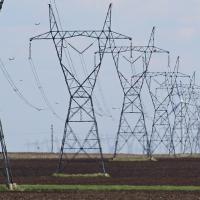
Washington State’s Chelan PUD has re-energized a high-voltage transmission line rebuilt in fire-resistant steel for better reliability in the Chelan Valley.
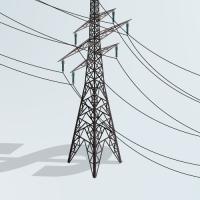
California’s South San Joaquin Irrigation District (SSJID) was recently handed a key victory by an appeals court in SSJID’s ongoing bid to replace investor-owned Pacific Gas & Electric (PG&E) as the local retail electric service provider.
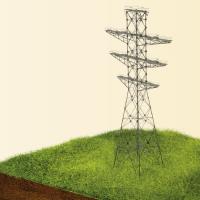
A group of New Mexico lawmakers is asking state utility regulators to launch a study that would evaluate shifting the state’s electric sector to public power. The lawmakers said in their petition filed at the New Mexico Public Regulatory Commission (PRC) that they “believe that it is probable that
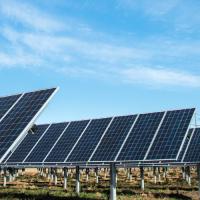
South Carolina public power utility Santee Cooper’s Jamison Solar Site, a 1.2-megawatt facility located on over five acres in Orangeburg, has become South Carolina’s first Gold Certified Solar Habitat Site.
Massachusetts officials recently announced the selection of an offshore wind project that includes a partnership between Vineyard Wind, the developer, and Energy New England (ENE), which is representing 20 participating Massachusetts Municipal Light Plants (MLPs) including Reading Municipal Light Department (RMLD).
The New York Power Authority (NYPA) plans to deploy light detection and ranging (LiDAR) technology to monitor the health of its grid and to help it unlock transmission capacity to enable more renewable energy to reach the grid. The LiDAR sensors will be deployed to monitor NYPA’s 230-kilovolt (kV)