Advocating for Public Power in Washington
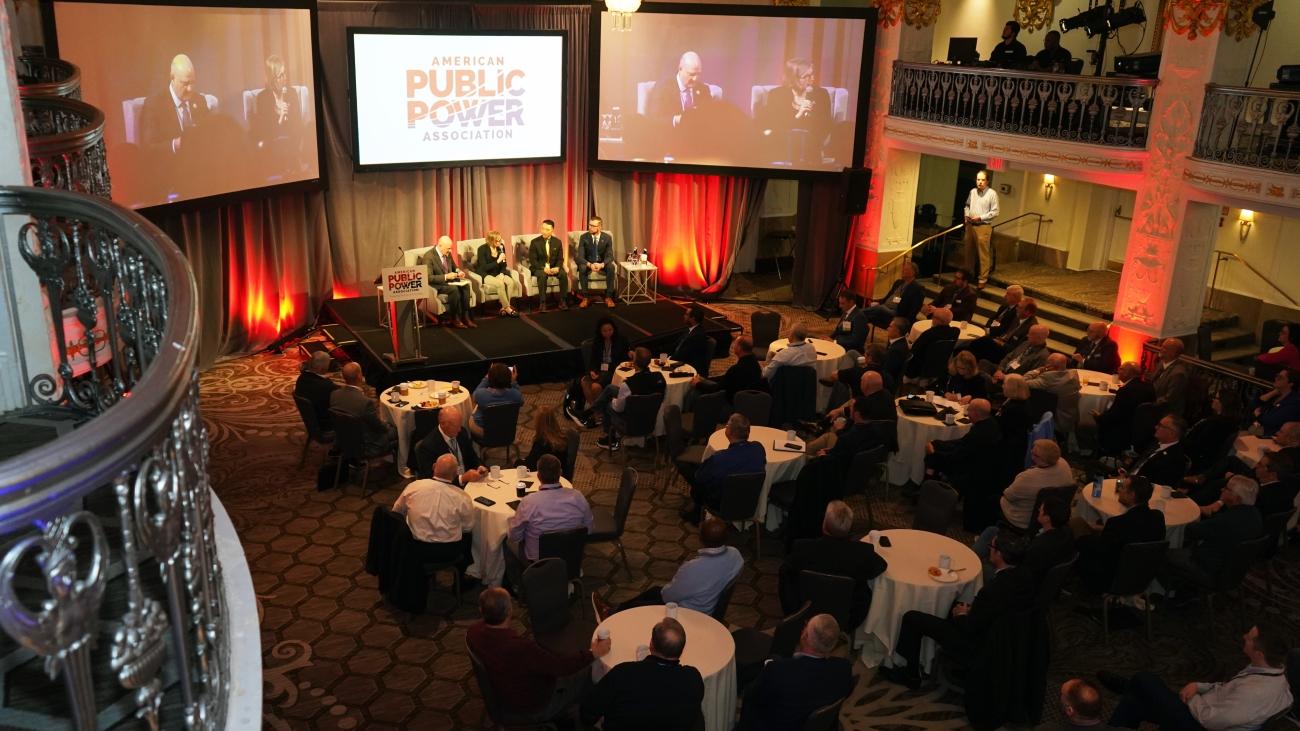
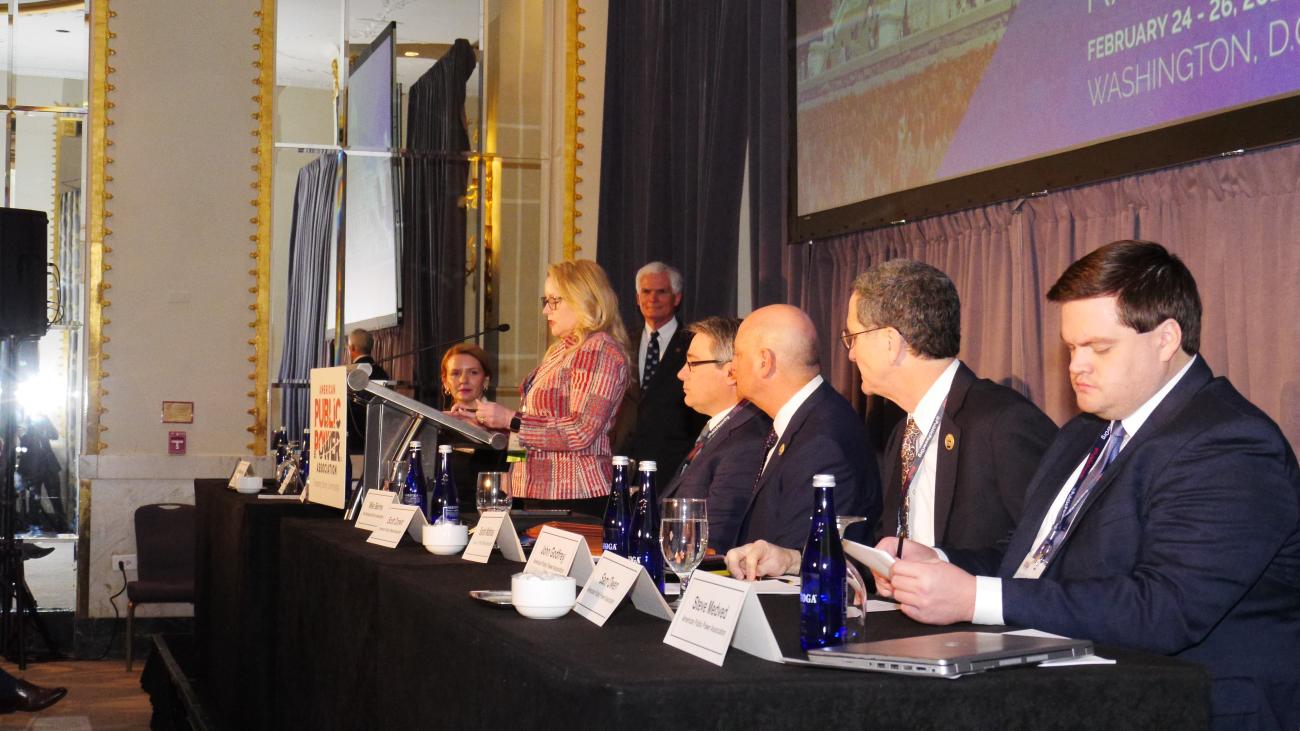
Public power utilities keep 2,000 communities and 55 million Americans reliably and affordably powered. These not‑for‑profit, community‑owned utilities belong to the people they serve and give customers a voice in decisions that matter most. During APPA’s Legislative Rally, public power leaders are in Washington to share hometown perspectives that shape smart, practical energy policy for strong communities.
Energy Policies for Strong Communities
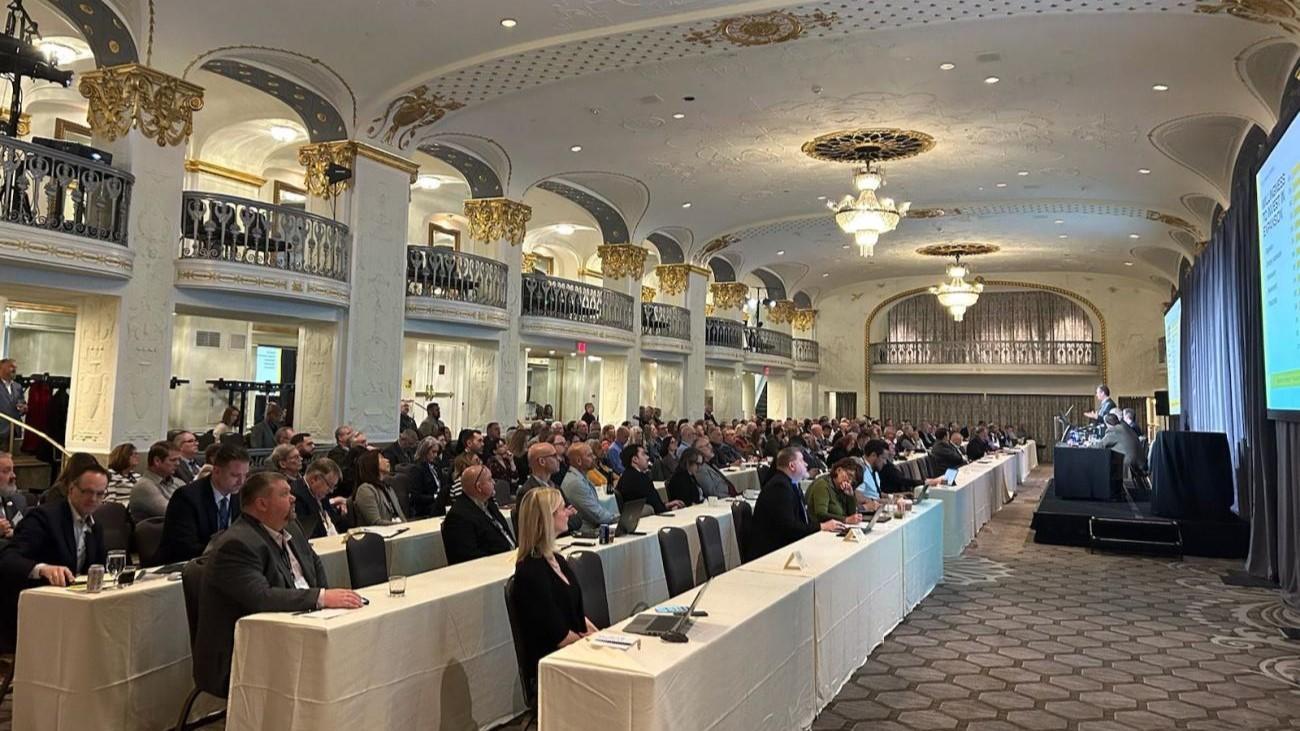
As energy needs evolve and communities face new challenges, public power leaders are asking Congress to support policies that maintain affordability, ensure electric reliability, modernize energy permitting, reduce wildfire risks, and reform FEMA so it remains a critical partner in disaster preparation, response, and recovery.
Public Power: Community Powered
For more than a century, public power utilities have powered strong communities; every day, it delivers reliable and affordable electricity that makes their communities livable and promote commerce.
Key Messages
Maintain Affordability
As community-owned, not-for-profit utilities, public power is uniquely concerned about reliability and affordability: we are the customers we serve. While the average public power utility rate remains low relative to the national average, several factors are driving up costs for all utilities. Public power utilities are working to ensure affordability for their customers, including by making sure that new large customers – not existing customers – pay their own way.
- Support increased funding for the Low Income Home Energy Assistance Program.
- Support changes in tax regulations that would protect customers from stranded costs by allowing public power utilities to lock large customers into 15-year contracts.
- Support bond modernization to help reduce costs and increase flexibility in financing the investments that make our communities livable and commerce possible.
Protect Electric Reliability
Unprecedented demand growth from traditional loads, data centers, and electrification is coming at a time when traditional generation is retiring prematurely and new, reliable generation cannot be built quickly enough. The North American Electric Reliability Corporation’s recent Long Term Reliability Assessment shows that there is a high risk that six regions of the country will not have adequate generation resources within the next five years. Congress must support policies that enable public power utilities to provide reliable, affordable and sustainable electricity to their customers.
- Federal policies must not force the early retirement of existing generation sources.
- Pass the Reliable Power Act (H.R. 3616/S. 3034) in the Senate to give the Federal Energy Regulatory Commission appropriate authority to determine and mitigate the reliability impacts of federal regulations.
- Enhance coordination between the electric and gas industries with higher standards for gas delivery, notification, and transparency to protect a reliable grid.
Enact Energy Permitting Reform
Lengthy and unpredictable permitting processes make it more difficult and costly for utilities to invest in needed generation, distribution, and transmission infrastructure. Customers ultimately pay the high cost for slow, cumbersome permitting rules. Federal policymakers should streamline permitting and siting rules to provide utilities with the clarity and certainty needed to invest in infrastructure to meet the growing electricity demand.
- Prioritize infrastructure neutral permitting policies and permitting certainty to contain costs and keep electricity affordable.
- Pass the SPEED Act (H.R. 4776) in the Senate to focus the scope of environmental reviews and reduce frivolous lawsuits.
- Pass the PERMIT Act (H.R. 3898) in the Senate to streamline permitting procedures under the Clean Water Act.
Mitigate the Threat from Wildfires
Wildfires are a growing national threat, intensifying each year and devastating more communities. Utilities must manage vegetation near power lines to reduce wildfire risk. Public power utilities face delays in implementing comprehensive vegetation management plans for rights-of-way (ROW) on federal lands, liability issues, and difficulties in procuring adequate insurance. The Fix Our Forests Act (H.R. 471/S. 1462) would reduce barriers public power utilities face when executing vegetation management plans and hazard tree removal, thereby reducing the risk of wildfires and protecting critical infrastructure from damage.
- Pass the Fix Our Forests Act in the Senate to increase the area for vegetation management around ROW and ease environmental burdens on public lands.
- Create a congressionally authorized voluntary federal insurance backstop solution to stabilize the insurance market and ensure continued reliability across high-risk wildfire areas.
- Support robust funding for research, development, and technology deployment, and staffing of federal land management agencies with federal wildfire mitigation and response authority.
Support and Strengthen FEMA
The Federal Emergency Management Agency (FEMA) plays a key role in disaster preparation, response, and recovery. FEMA helps state and local entities by coordinating federal response before, during, and after an event, and by providing public assistance grants when local resources are overwhelmed. Knowing that there is a federal backstop in times of disaster allows state and local governments to focus on saving lives and protecting property, including through maintenance and timely restoration of power.
- Support H.R. 4669, the Fixing Emergency Management for Americans Act of 2025, which would streamline rules and expedite payments.
- Support H.R. 2836, the FEMA Loan Interest Relief Act, which would require FEMA to pay interest to public power utilities that take out loans to cover costs that are eventually repaid by FEMA.
- Support H.R. 164, the POWER Act of 2025, which would allow cost-effective hazard mitigation activities as part of power restoration.