June 19, 2026, was a big day for Seattle — it was a holiday, three cruise ships were coming into its port, and the city was hosting the U.S. Men’s National Soccer Team for its second match in the 2026 FIFA World Cup, against Australia. Well beyond the stadium, enthusiasm and a celebratory atmosphere infused the numerous watch parties, fan zones, transit system, parks, and downtown businesses.
Amid all this activity, Seattle City Light was prepared.
Starting Early
Phil Ambrose, strategic capital programs manager at Seattle City Light, said the initial coordination calls began in 2024, and the robust coordination effort ramped up starting in June 2025. Even before then, Ambrose said, City Light recognized the scope of the planning needed for the 2026 World Cup after the city hosted the MLB All-Star Game in 2023.
For City Light, prepping for the World Cup meant taking a close look at its system and potential needs, including around Lumen Field and critical sites such as fan zones and improved lighting at points of interest. Ambrose said that assessment and planning focused on identifying what feeders it needed to reconductor, completing substation condition assessments, and circuit breaker maintenance to increase reliability.
A follow-up summary for Seattle noted that serving as a World Cup host city was one of the largest collaborative efforts in Washington state’s history, bringing more than 400 organizations into the planning and delivery effort.
Underpinning the success of all this planning was a public power utility delivering on its long-standing promise to its community: to deliver safe, high-quality, uninterrupted service.
While Seattle has hosted major events before, Ambrose said the scale this time was different, most notably because it was a monthlong event. An estimated 1.2 million people traveled to the city, many from abroad, which meant they were likely staying in the city for two or three days before and after the game they were attending. And unlike concerts or single sporting events, the activity was not concentrated at the stadium but included many concurrent events across the city. There also was the pressure that came with having billions of people across the world watching the broadcasts.
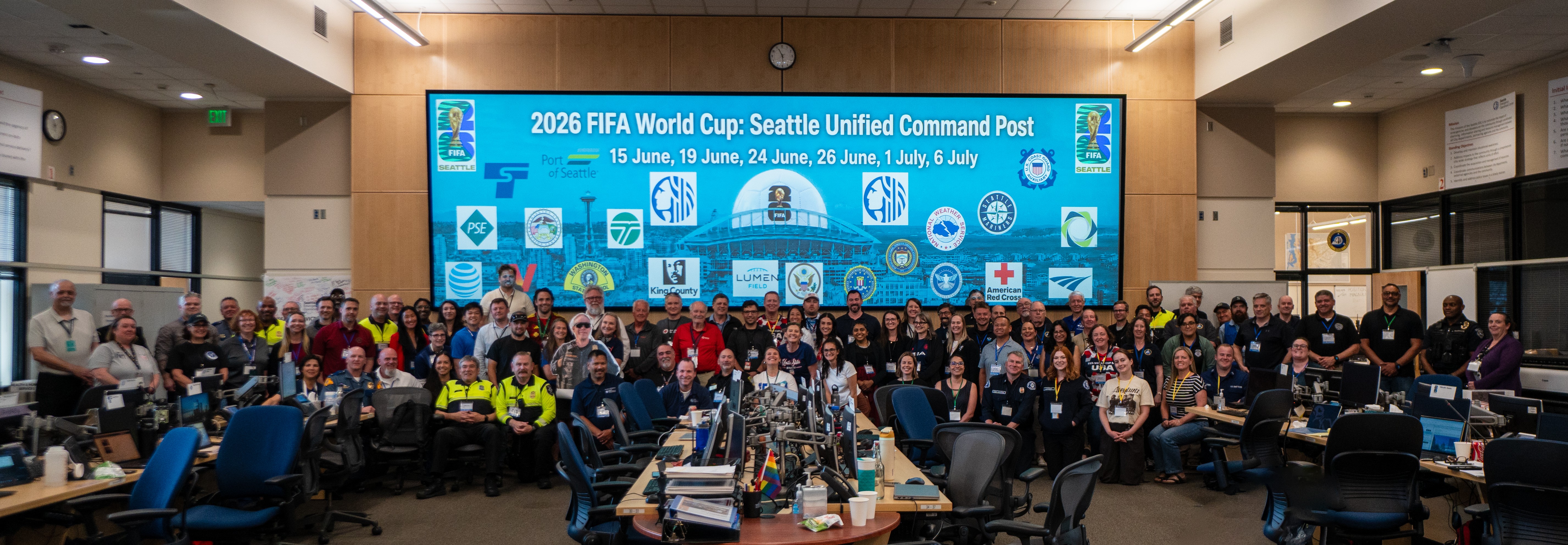
One major leg up for the city-owned utility: Not having to start from scratch on how to coordinate with other municipal authorities.
“For us, that wasn’t as much of a struggle, because we are part of one structure,” Ambrose said. “Compared to the discussions we had with [investor-owned utilities], we had regular discussions with permitting folks, with inspections ... we really functioned as a unified team.”
Throughout the event, City Light stood up its incident management team, following a structure similar to its storm response, to coordinate with the office of emergency management.
Ambrose said the City Light team — along with city departments including transportation and emergency management — coordinated to move around and prioritize maintenance schedules to minimize effects on visitors and fans. The city also imposed a moratorium on construction activities during the World Cup.
“We always have ongoing work improving our system,” Ambrose said. “We had to make decisions about prioritizing to get things done before [the World Cup] or having to push it to right after. We had to be deliberate on what work we could pause and what work could proceed during the moratorium.” In some cases, that meant planning out windows between matches when certain work could proceed.
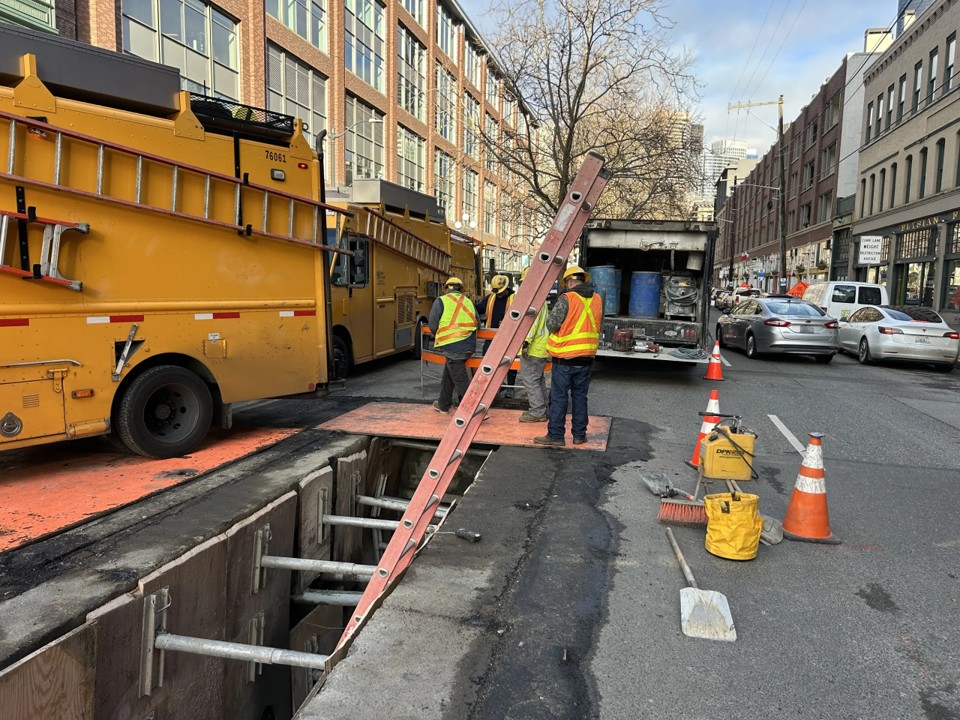
The goal of these efforts was to “ensure that our system was operating as normally as possible,” Ambrose said. While the system saw some high demand, which was expected, there were no disruptions in service throughout the event.
“Except for the first match day, June 15, peak load during the World Cup was comparable to typical demand in June and July in non-event years. And the June 15 spike was primarily driven by near-record temperatures rather than World Cup activity,” shared Kate Jacobs, media relations manager for Seattle City Light.
While by all measures the coordination was a success, Ambrose reflected that it would have been helpful to have started the planning and coordination even earlier.
“We didn’t have any significant outages, lighting, or security issues, but … if we had more time, it would have allowed us to complete other improvements earlier.”
Importantly, the efforts were not just for the event, but advanced Seattle’s strategic priority to improve its long-term reliability.
“FIFA provided a really good way for us to see that we can accomplish a lot when we really focus on a certain event … that also supports our long-term goals,” Ambrose added.
A Foundation for Success
For the Los Angeles Department of Water and Power, the 2026 World Cup preparations were a warmup for the 2028 Olympics. That’s in part because the central stadium for the FIFA matches is served by the neighboring IOU, while the Olympics will use venues primarily within LADWP’s territory. The eight World Cup matches hosted in Los Angeles brought teams from 12 countries across 28 days, whereas the Olympics and Paralympics will involve athletes and fans from 180 countries over 68 days.
“We were very deliberate about leveraging the World Cup as a stress test of preparedness in order to expose any vulnerabilities and afford us plenty of lead time to make necessary corrections or modifications as we head into the Olympics,” said Chief Resiliency and Emergency Officer Zoraya Oliver-Griffin.
While the city didn’t have to develop new venues to host the World Cup, LADWP did ensure critical sites had adequate infrastructure, including creating utility-sponsored hydration stations.
“While Southern California Edison supported the actual delivery of power to [SoFi Stadium], we supported events occurring within the city,” Oliver-Griffin said. These included hosting the U.S. Soccer House, concerts, park events, fan zones, and other simultaneous occasions.
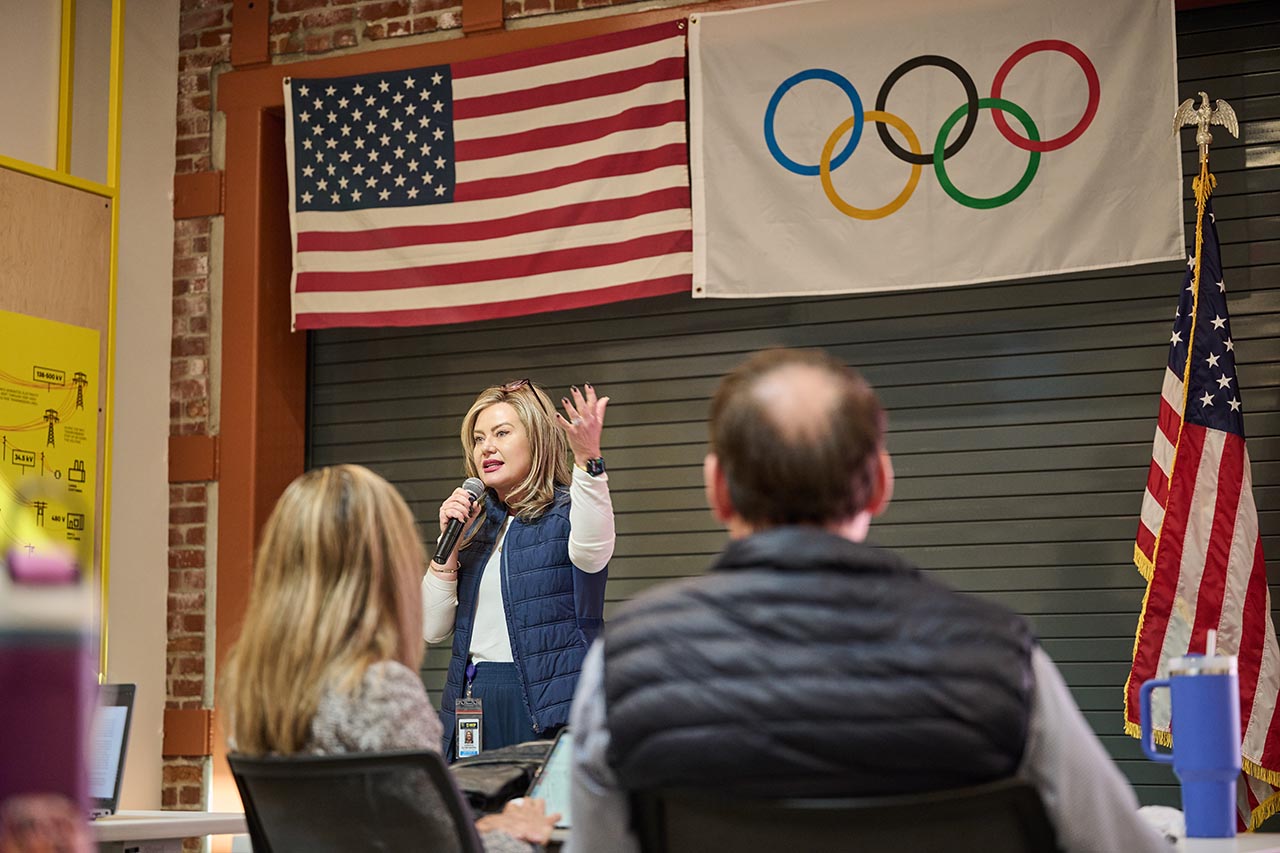
“As soon as we were made aware of those locations, our preparedness planning began, because we are a foundational piece of the city’s success,” she said. That meant ensuring accurate forecasting to plan power delivery and prioritizing system improvements to support reliability, including upgrading and replacing aging equipment. The utility developed a specific special-event plan that detailed everyone’s roles, responsibilities, and expectations across the organization. LADWP also ran stress tests for different demand scenarios and its cybersecurity response capabilities.
Upholding its part of the planning was “relatively easy for us because we do the same thing that we do every single day, which is go above and beyond and have a very high level of commitment to provide reliable water and power service to our customers and to the Olympic venues already in existence,” she added.
Community ownership of the utility is also an advantage.
“Being one of the largest departments within the city does give you an advantage because you’re already part of the city family. We are well-versed in each other’s capabilities because we are collectively engaged in so many other aspects of overall city management and response,” Oliver-Griffin said.
Like Seattle, LADWP took part in World Cup coordination calls that began as quarterly meetings, then monthly meetings, and ramped up to daily briefings during the event. LADWP activated its emergency operations center throughout the event and had a response team monitoring the system. Oliver-Griffin said the team consisted of representatives from across the organization, including power, water, communications, security, logistics, and customer service.
“We treated our response as though it was an emergency for us, where it’s all hands on deck, and we had representatives from our major business lines ready to go,” she said.
In addition to FIFA coordination, Oliver-Griffin said the mayor created an Office of Major Events to prepare for both the World Cup and the Olympics. The office focuses on alignment and awareness across city departments of the potential challenges or changes related to planned activities. Oliver-Griffin said the coordination helped ensure LADWP and the other entities involved “danced in sequence” throughout the event.
“Every day, everyone understood what the plan and the risks were going to be,” she said. “We all understood who, and how, we would be partnering with should anything happen and there were clear lines of communication.”
While planning helped LADWP be prepared for the coordinated events, the team had not anticipated the volume of pop-up events that occurred during the World Cup. Having a rapid response team and a stock of emergency supplies in its warehouse helped LADWP adjust to quickly meet the needs for those events and gave the utility a better sense of how it will need to scale up accordingly for 2028.
Looking ahead, Oliver-Griffin said LADWP has expanded and accelerated its goals to identify and address system strengthening to its distribution system, substations, transmission system, and generation infrastructure to not only support the Olympics, but to advance the city’s goal of transitioning to 100% clean energy.
While Oliver-Griffin leads the team responsible for event coordination, she said successfully planning for a major event requires everyone across the utility to be on board. “It cannot be executed effectively with only a program management office. It takes attention by personnel from across the organization coming together to be very deliberate in our support of major initiatives.”
Capturing Lessons
Silicon Valley Power, which provides electric service for the city of Santa Clara, California, also focused on planning ahead of major events at Levi’s Stadium (called “San Francisco Bay Area Stadium” for the World Cup) in 2026, including six World Cup games and Super Bowl LX in February.
Like Los Angeles and Seattle, Santa Clara has a long history of supporting major events. Still, SVP said the 2026 events “introduced a substantially different level of complexity, particularly because of their international significance, heightened security requirements, and the involvement of multiple federal agencies.”
SVP’s preparation began in early 2024 and included comprehensive infrastructure inspections and testing, physical and cybersecurity enhancements, development of contingency and recovery plans, and coordination of emergency response procedures. SVP also invested in significant upgrades to its security camera and monitoring infrastructure, working in coordination with the Santa Clara Police Department to strengthen protection of critical utility assets.
“The objective was to identify potential vulnerabilities in advance and establish clear procedures for responding to a range of operating scenarios,” SVP Director Nico Procos said.
The effort required extensive coordination across nearly every aspect of SVP’s organization, including utility operations, transmission and distribution, substations, communications, cybersecurity, and administration. SVP also worked closely with city emergency management, stadium representatives, neighboring utilities, and other regional partners.
SVP has been taking on unprecedented electric system growth, including major transmission, substation, and distribution infrastructure investments. “One of the most important management challenges was sequencing and prioritizing construction, maintenance, and operational activities to ensure that critical projects continued progressing while maintaining the necessary resources and system configurations to support the events,” Procos said.
For each World Cup match, approximately 24 SVP employees were part of an incident command team that offered event support and response to potential electrical system disturbances.
“The first World Cup match required a level of coordination and execution similar to Super Bowl LX. As the tournament progressed, our teams became increasingly familiar with their assignments, communication protocols, and operational responsibilities. This allowed SVP to refine its execution and improve efficiency with each successive match,” said Procos.
The utility took lessons from the event coordination and created a comprehensive, repeatable preparedness and response program structure for major special events. Some key takeaways for SVP include involving law enforcement and security agencies early on for threat awareness and operational planning, and to build the relationships essential for information sharing.
“I want to recognize the extraordinary commitment of the SVP team and our partners. Their preparation began long before the first game, and they balanced the demands of these international events with their daily responsibility to serve Santa Clara. I am deeply grateful for their professionalism, dedication, and teamwork,” Procos said.
“Being a public power utility means our responsibility extends well beyond the stadium,” added Procos. “While supporting an internationally significant event is important, our primary obligation remains providing safe and reliable electric service to Santa Clara’s residents, businesses, and critical facilities. This required us to approach event planning from a broader community perspective, ensuring that the additional resources and attention devoted to the stadium did not compromise our ability to serve the rest of the city.”