As communities face increased risk of extreme weather events, emergency response must take a more predictive, rather than purely reactive, form. Utilities are adjusting how they prepare their systems and territories to better withstand, respond, and recover from natural disasters. Resilience planning efforts range from analyzing the array of risks and challenges a utility might face to reinforcing their grids, preparing public educational materials, and coordinating with state and regional organizations.
Preparing the Grid
Unlike cities in other parts of Florida, Jacksonville tends to be spared from more intense hurricane landfalls. However, JEA, Florida’s largest public power utility and eighth-largest nationwide, has taken a proactive approach to disaster preparedness.
Adam Pendley, JEA’s manager of emergency preparedness, said the utility’s work has entailed addressing potential hazards before they become a liability during a hurricane or other disaster, including addressing vulnerability points on power lines, such as vegetation overgrowth.
“Over the past year, more than 1,300 miles of trees have been trimmed back to keep them from interacting with power lines during storms. We’re also replacing older utility poles with more up-to-date poles, which has encompassed over 3,300 new utility poles across 300 miles of power lines and 5,900 transformers,” he said. “One of the other things we’re doing is replacing live front electrical cabinets with the dead-front cabinets for our underground lines, meaning they’re fully sealed. It not only helps prevent disruptions during flood situations, but it also keeps the small critters out.”
In addition to reinforcing the grid, JEA also oversees a public communications campaign designed to inform customers about storm preparation.
“As storm season approaches, we put together published media designed to keep Jacksonville informed,” Pendley said, giving a recent example of a video that showed how to assemble a personal readiness kit.
Even as JEA has integrated updates to its grid and worked to expand partnerships with outside organizations, the utility’s approach ultimately centers on ensuring the community comes first in both preparation and response.
“If you’re going to open your doors to discuss your plans, make sure you open your doors to everyone in your community that’s going to be impacted. Make sure you’re talking to them, because anything that’s going to affect us is not just going to be a utility problem. It’s going to be a community problem,” Pendley said.
Preparing the Community
New Bern rests along the North Carolina coast at the confluence of the Trent and Neuse rivers, putting the city and surrounding flatlands at risk of heavy flooding, whether from storm surges or hurricanes.
Hurricane Florence, which made landfall in southern North Carolina in September 2018, produced some of the most devastating flooding in New Bern’s history.
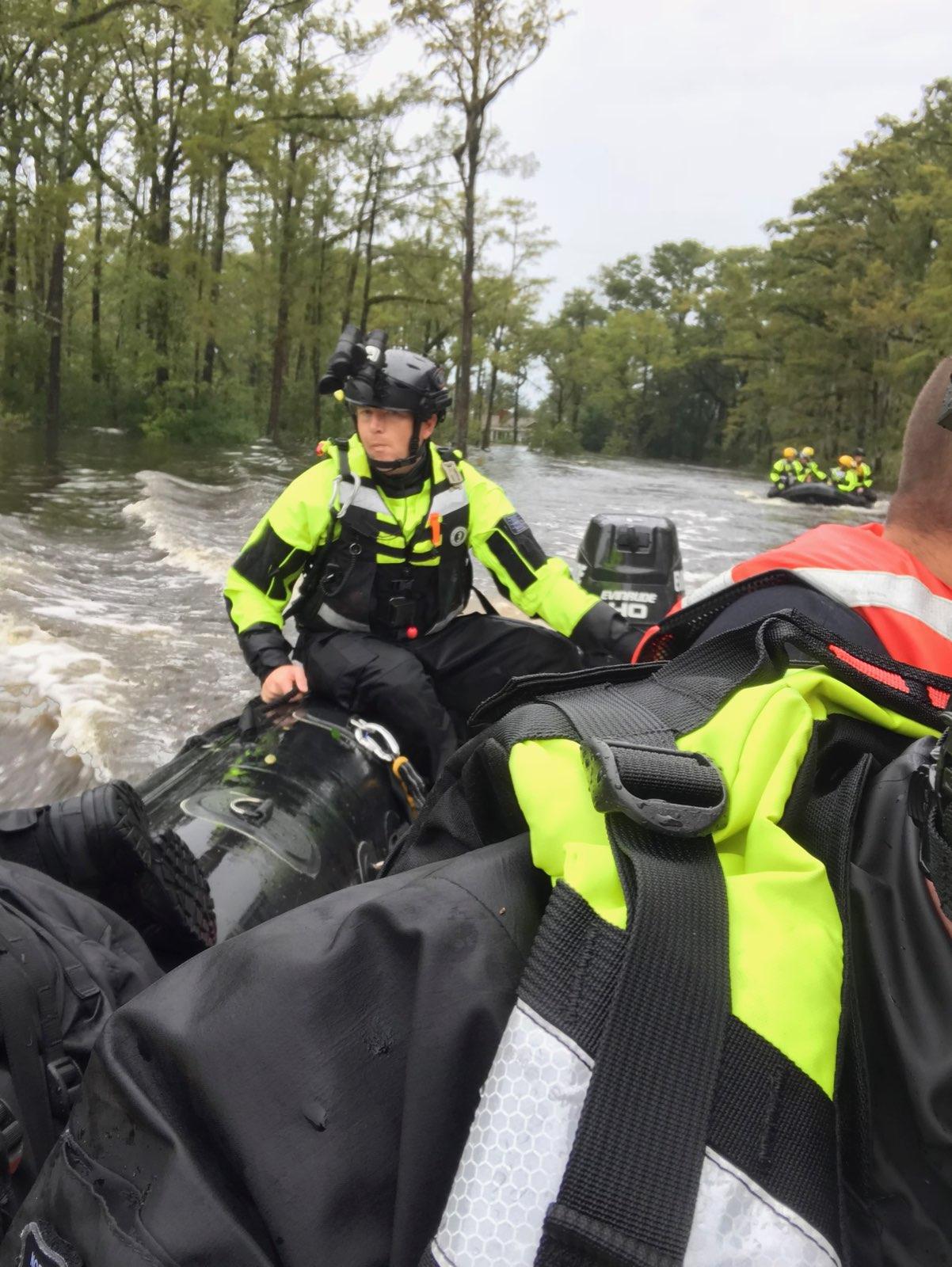
Photo courtesy City of New Bern.
Colleen Roberts, public information officer for New Bern, said the city immediately began organizing a study of Hurricane Florence’s damage in the aftermath. “The decisionmakers came together so quickly that by February 2019, we had already started creating [a request for proposals] for someone to help us put together a hazard mitigation and resiliency plan.”
The city government and utilities mapped out where the storm surge caused the greatest disruption and came up with informed solutions to mitigate the impact of future events.
“Not only did we bring together city leadership, elected officials, and scientists who study stormwater and flood risk in North Carolina, we did robust public outreach. We held public forums and hung maps where people could, for example, put up stickers showing where they live or where their businesses are located,” Roberts said.
She noted that New Bern put together a flood-preparation checklist for the community. “We keep a stack of them upstairs outside the courtroom whenever we have governing board meetings. And we’re often refilling them, especially once storm season starts for us.”
Roberts outlined that New Bern has also shared information with other coastal communities and national-level partners. For example, in a recent session with representatives from the Federal Reserve in Virginia, she and other colleagues presented what the city went through and how it is preparing for the future.
Since Hurricane Florence, New Bern has installed flood-management devices that help water drain from the city, especially in areas where development has removed natural features (such as wetlands and forests) that would have helped to absorb heavy floodwaters.
“We were able to install a pump that will have an impact on 59 acres surrounding it,” Roberts shared. “We can’t keep the stormwater from coming in, but now we have a mechanism to help pump it out when that happens.”
New Bern also has begun building the support needed to install a broader suite of storm management improvements.
“In fall 2025, voters passed a bond referendum in New Bern that includes $6 million in stormwater improvements. We really feel like we have the buy-in from the public to make these upgrades. … It’s going to have a meaningful impact on how we handle runoff and floodwaters in the future,” said Roberts.
Roberts recommends cities take a proactive approach to resilience planning.
“I would encourage governments to be more proactive in their messaging and consider making decisions earlier. What becomes more challenging during a storm is telling folks how to evacuate. If you share the most efficient routes in advance, your customers are more reliably able to make their way to safety. It all comes down to knowing what you need to address and getting ahead of that,” she said.
A First Step
Like many communities throughout the Front Range of the Rocky Mountains, Loveland, Colorado, is dealing with increasingly severe wildfires. As a result, the city’s public power utility has stepped up how it is evaluating wildfire risk and building out its emergency planning efforts.
City of Loveland Utilities Senior Electrical Engineer Kent Coldsnow said that the utility had “quite a few processes in place” related to wildfire mitigation, but not a formal wildfire mitigation plan, when the Alexander Mountain Fire directly affected some of its infrastructure in 2024.
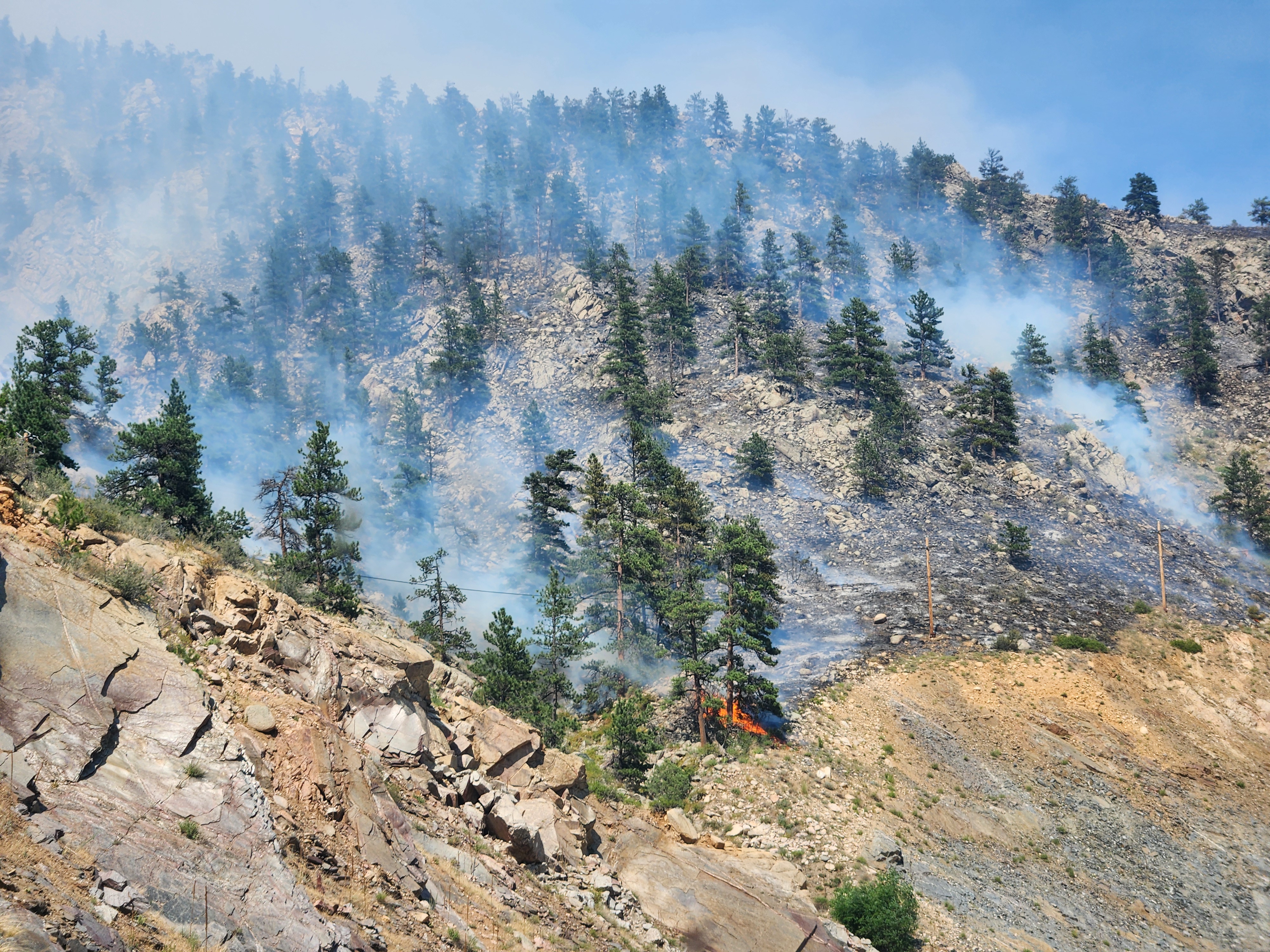
“We have a wildland-urban interface on the west side of town and winds frequently blowing in. So, we wanted to make sure that we were doing everything we could to reduce the risk … since wildfire threats are year-round now and not just confined to the mountains,” he said.
Shortly after the 2024 fire, the utility began working with APPA on its Wildfire Preparedness Plan. (Loveland Utilities took part in a joint effort between APPA and Argonne National Laboratory on wildfire mitigation planning.)
The plan contains immediate resiliency measures as well as post-wildfire evaluation provisions. The resiliency measures include infrastructure upgrades designed to both protect its grid from wildfires and mitigate the grid’s risk as an ignition point.
“We are planning to develop a project to install intumescent mesh on poles, which is covered in a black carbon material that when heated forms a shell that protects the pole from wildfire. We’re also evaluating current-limiting fuses as an addition to our existing non-expulsion protection, where sparks are contained within the fuse itself, eliminating a possible ignition source,” Coldsnow said.
In addition to protecting the poles in the moment, such measures reduce costs associated with replacing damaged poles that run throughout difficult-to-access, rocky terrain, and are an added safety feature for line crews.
Recent wildfires have elevated the budgetary priority of these projects. Coldsnow said the utility will review its wildfire mitigation plan annually to “ensure it’s still adequate as new risks emerge and improved equipment becomes available.”
For other public power utilities looking to build out their disaster response planning, Coldsnow encourages them to not feel intimidated by the potential scope of the project and to instead focus on taking the first step(s).
“Reducing the risk doesn’t have to be a big cost investment. Just taking care of the low-hanging fruit first can build a lot of resilience and helps set the stage for future improvements you might want to make,” he said. “With the APPA project, we participated with several other utilities, and some of them were larger and had whole wildfire mitigation-dedicated plans. It was interesting to learn from them and see what they had already implemented.”
Preparing to Collaborate
Sometimes, emergency response entails coordination with entities beyond a utility’s service area. As such, planning for coordination activities, such as mutual aid, and fostering ongoing relationships with potential collaborators is critical to emergency preparedness.
New Bern is especially attuned to the resources visiting mutual aid crews need for days of deployment.
“We had to make sure we had enough catering to feed everyone, as well as enough hotel rooms for everyone who came to help. We also needed to have outbreak rooms on hand so people could have a place to come back to and plan. These are all things you need to ensure are in place for the other utilities who show up,” said New Bern Director of Public Utilities Charles Bauschard.
Maintaining open lines of communication is key, Bauschard noted, for ensuring affected utilities have the material they need for restoration. “Most of the communities in our region that are responding to mutual aid are all watching the same storm system. And we’re all asking each other who has what resources, and whether you need those at home or you can spare some for your neighbors.”
As a larger utility with significant resources and ability to help, JEA has worked to build its mutual aid practice, particularly in ensuring the surrounding areas that are affected the most receive the help they need.
“We will get on the road to the first area that might need the help. And if we get there and their impact was not as bad, instead of turning around we divert to the next area that needs help. That’s just a good best practice when it comes to municipals helping each other,” Pendley said.
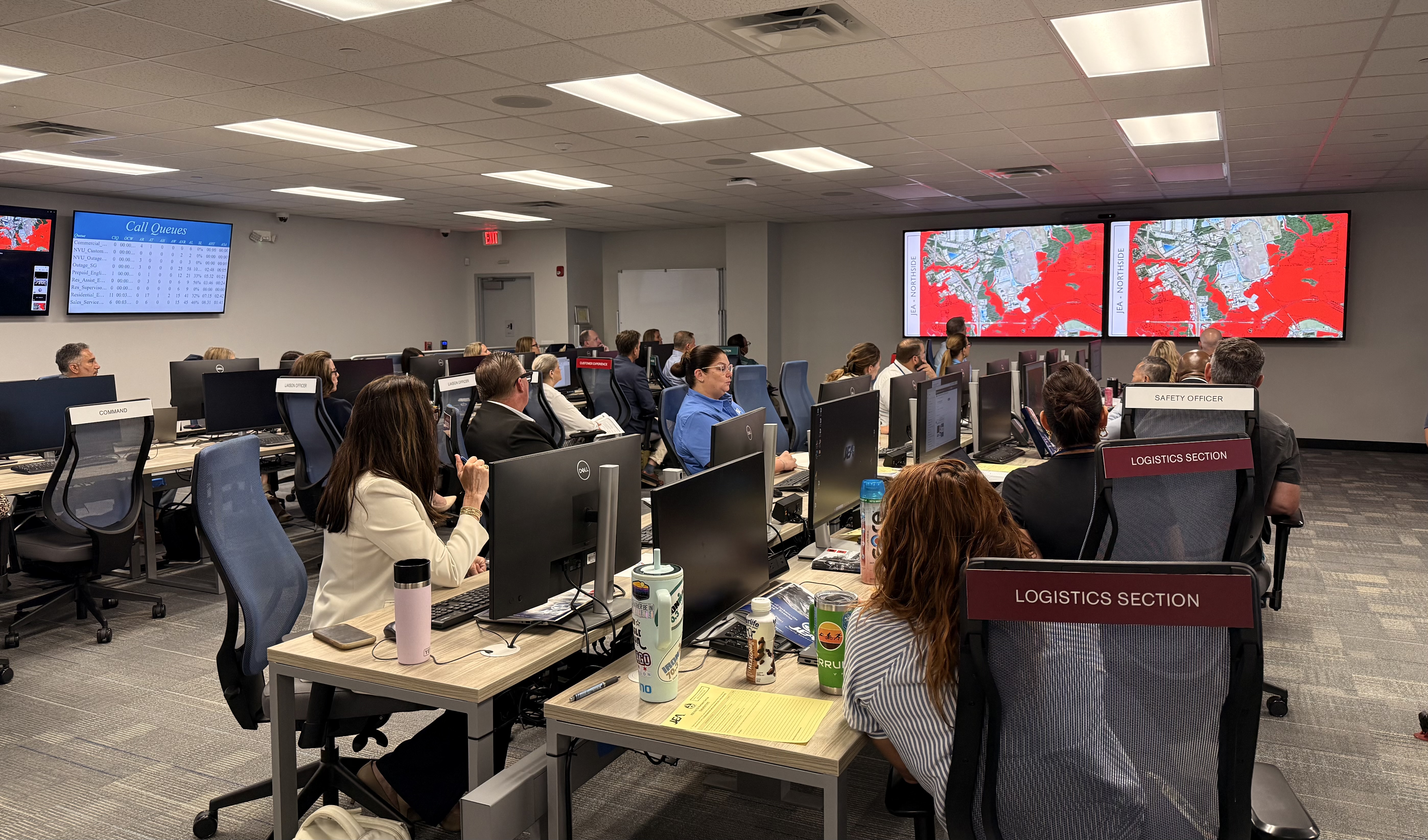
Another facet of JEA’s emergency preparedness is ongoing collaboration and discussion with other stakeholders both within the city of Jacksonville and in surrounding areas. Regular exercises bring stakeholders from across the area together to game out various emergency scenarios.
“We have an excellent emergency preparedness team that gets us to think through these scenarios. They do training exercises and hold quarterly meetings at the [Jacksonville Emergency Operations Center],” said Myers Vasquez, public information officer at JEA. “We have great relationships with the city of Jacksonville and their emergency preparedness department, and our CEO coordinates with the mayor in informing the public of what’s going on so they’re getting the information they need.”
Pendley noted that JEA makes an effort to incorporate state- and national-level stakeholders within its disaster planning and annual preparedness exercises, and it typically has a representative present from the Florida Division of Emergency Management, among others. In 2025, JEA’s exercise included representatives from APPA and the Tillamook People’s Utility District in Oregon.
“We always open our doors,” Pendley said, “when a partner utility wants to learn from our work.”