When it comes to developing power supply plans, public power utilities are grappling with a series of variables, including the nationwide surge in large loads and data centers. Tackling the uncertainties surrounding power supply planning is leading public power utilities to find fresh approaches, from weighing demand-side solutions alongside generation options to extended scenario planning and customer engagement.
Durable, Flexible Solutions
Salt River Project in Arizona shifted from an integrated resource plan, or IRP, to an integrated system plan, or ISP, in 2023. The ISP approved power system strategies to be implemented between 2025 and 2035.
“The power system as a whole is getting much more dynamic,” said Mary Faulk, integrated system planning and support director at SRP.
Faulk said the ISP approach gives utilities “a much more comprehensive way” to evaluate the array of generation and distribution system options.
With an IRP, “you’re really thinking about that generation mix only and thinking about what options you can choose to be able to meet that need on the supply side. An integrated system plan, you’re looking at a lot of different options to be able to plan that power system holistically,” she said.
She also addressed how much flexibility is built into SRP’s ISP to account for changes in power supply dynamics. That includes looking at various scenarios “to be able to understand what system solutions or decisions perform well under all of this uncertainty in the future.”
With scenario planning, “you’re thinking about all these variables that are outside of your control as a utility: load growth, policy, cost,” Faulk said.
“What you’re looking for are things that stand the test of time and are durable solutions, regardless of a high load growth environment like we’re in today, but also if we started to see some retraction in load growth or some slowdown,” she noted.
“Not only is it an analytical framework, but we’re also trying to understand our customers’ sentiments and what they want out of the power system,” Faulk said, adding that SRP actively engaged with customers during the ISP development process, including robust customer surveys, focus groups, and an advisory group.
“One of the things that was most beneficial coming out of the ISP was being able to ask customers in a choice-based exercise, ‘If you have a power system that looks like this, what would you be willing to pay for?’ Or ‘If you have constraints with dollars, are you more concerned about spending money to make sure it’s reliable versus sustainable?’ Having those robust choice exercises allowed us to really get a sense of where customers wanted us to be spending their money,” she said.
The ISP was developed with an eye toward helping to minimize the financial impact on customers.
“We looked at levers we could pull besides just building out the system to be able to meet the future needs,” Faulk noted, listing energy efficiency and demand response as examples. SRP also analyzed how it sent price signals through its customer programs and time-of-use rates, and the ISP recommended some shifts in the hours and outreach strategies that would deliver customers better value and allow them “to be able to act in a more prudent way.”
A Right-Size Horizon
Grant County Public Utility District in Washington adopted its 2026 IRP, which looks out over a 20-year horizon, in late August.
The utility’s current power portfolio, combined with anticipated power supply agreements, contracted renewable generation projects, and continued participation in wholesale energy markets, are expected to provide sufficient energy to serve customers through 2046, it said when commissioners approved the IRP.
Grant PUD Senior Manager of Power Portfolio Strategy Michael Frantz characterized two key aspects of the plan: acquiring the capacity for short-term needs, including building assets that can deliver by 2032, and exploring a path to fulfill a long-term clean energy need.
Frantz said the 2026 IRP places solar as a proxy resource for the latter, as it is currently the least-cost resource for the PUD based on its forecast assumptions.
Grant PUD is “not really comfortable with what our portfolio looks like with a whole bunch of solar, a whole bunch of battery, and obviously our hydro-based resource.”
Therefore, Frantz said, the next IRP cycle will focus on exploring alternatives such as small modular reactors, or SMRs, and geothermal energy. The utility is also looking at natural gas generation as an option. That means doing testing and studies that are already underway to get a picture of what’s available and what’s possible.
This year, commissioners authorized Grant PUD General Manager and CEO John Mertlich to participate in the Mid-C Geothermal Interlocal Cooperative Agreement with Chelan County and Douglas County PUDs. The agreement calls for the PUDs to explore the potential of geothermal energy as an additional source to supplement the utilities’ Columbia River dams.
For SMRs, Frantz said the PUD’s focus is on understanding the cost risks in such projects so it can build comfort with those technologies ahead of the next cycle.
He also discussed how the PUD’s integrated resource planning has evolved over the years to account for changes in power supply dynamics in the U.S.
There is a “chicken-and-egg relationship between load forecast and resource acquisition and the lead times associated with resource acquisition,” he said, noting the need “to manage and right-size things over the right planning horizon.”
“It used to be energy planning and volumes and being worried about critical water here in the Northwest, and now it’s really becoming more of a capacity problem,” Frantz said, noting how Grant PUD has become a dual-peaking system (with summer and winter peaks).
In its latest IRP process, Grant PUD needed to adjust its assumptions for its hydropower assets. “We’ve traditionally had a strategy of selling off a lot of the surplus attributes to our hydro project,” he said, “but given the way things have changed, we’re having to retain a lot of those attributes, and that’s a big difference for us.”
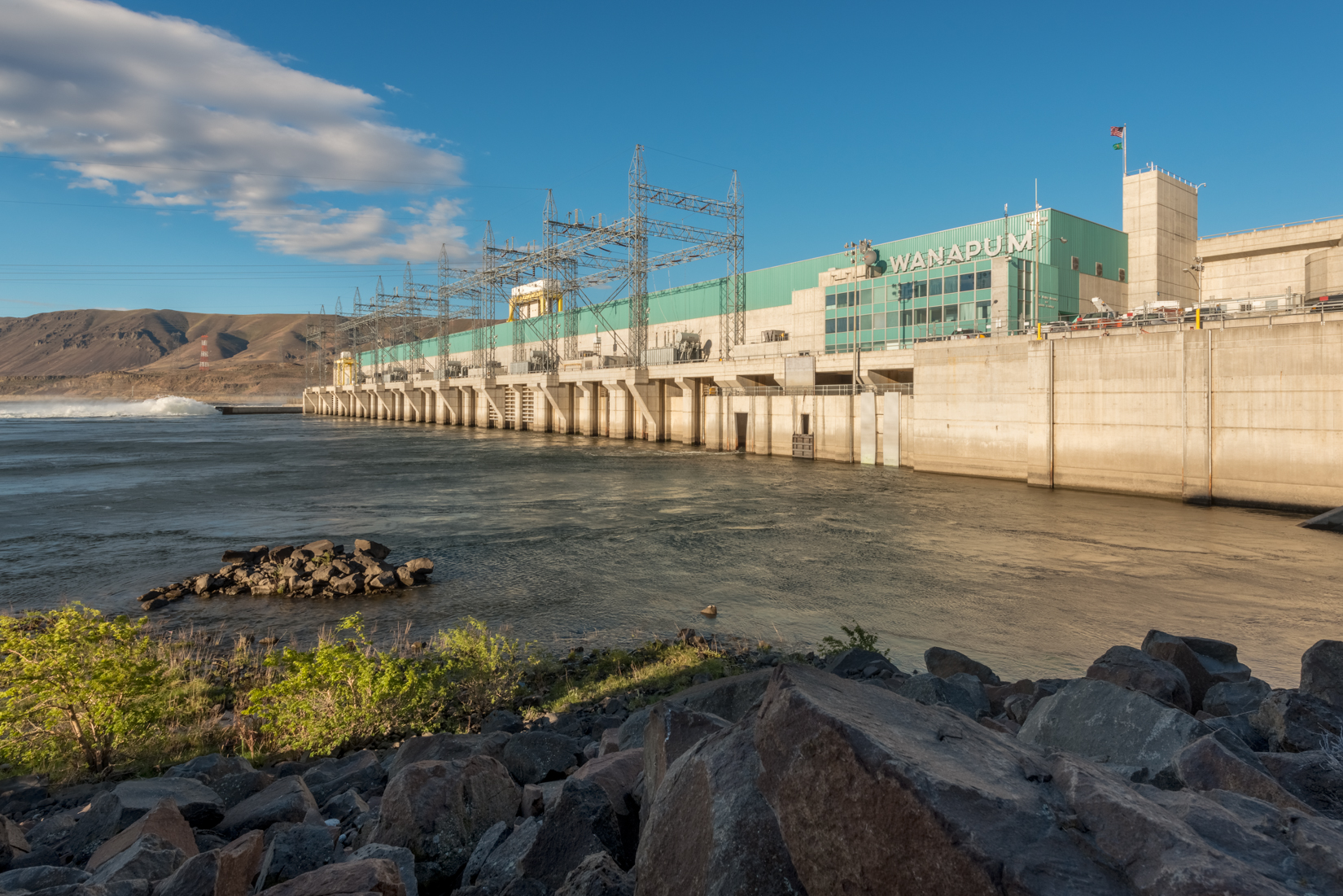
Grant PUD’s two Columbia River dams and smaller hydropower projects have a generating capacity of more than 2,100 megawatts. The Priest Rapids and Wanapum dams are collectively known as the Priest Rapids Project.
Frantz also discussed how the utility evaluates power purchase agreements and self-build generation project options as it works to get ahead of load growth and maintain affordable rates.
“Acquiring new resources is a fairly new exercise for Grant,” he said. Through a series of contracts, “we’ve essentially been able to grow into our hydro projects. As we get more load, we were able to access more [of] Priest Rapids.”
Grant’s last two IRP cycles, 2024 and 2026, have reinforced “the recognition that we need to get new resources,” said Frantz.
In 2024, he said, the capacity needs and timelines for fulfilling short-term needs meant PPAs were the only viable option for the PUD. “We just did not have the capabilities to respond ourselves.”
With the 2026 cycle, Frantz said, the PUD is looking at some self-build options but still will rely on PPAs for short-term capacity needs. “Our internal interconnection queue is pretty booked up, so for us to insert ourselves into that to develop our own project, we’re looking at years and years down the road.”
Scenarios and Sensitivities
Lansing Board of Water & Light’s 2026 IRP is a 20-year guide for meeting customers’ energy needs while complying with the state’s clean energy law.
The plan identifies pursuing nearly 1,400 MW of new renewable energy over the next 20 years to help the Michigan public power utility achieve its goal to use 100% clean energy by 2040.
In the near term, the utility is going to add proven technology such as solar energy, wind energy, and battery storage with shorter durations, said BWL Director of Strategic Planning Kellee Christensen.
“In the future, we’re hoping to utilize new technology such as small modular reactors. We’re studying emerging technologies as they come out, like fuel cells, and also keeping an eye on advanced battery storage.”
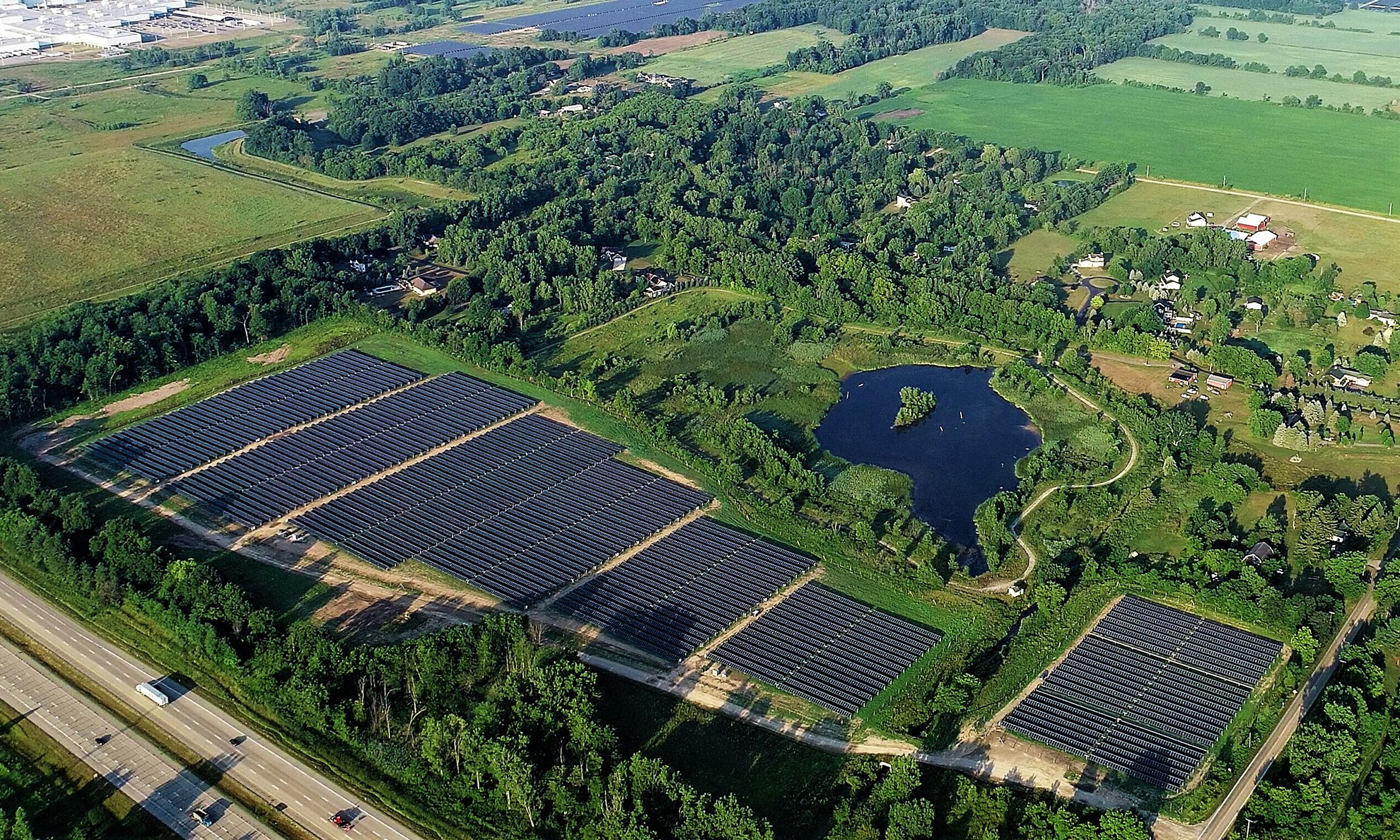
The utility also has a natural gas generation fleet that it will continue to utilize, Christensen noted.
BWL has to be “responsible to stay ahead of growth and make really disciplined decisions as to whether we build something or we sign a PPA … because those costs get allocated differently,” she said, with the overall objective to ensure “we’re protecting the customer’s affordability in the long run.”
The utility’s approach is to remain flexible in evaluating contract structures, ownership models, and risk allocations, while considering the full cost of each option, including energy and capacity value, transmission and interconnection costs, market exposure, operating costs, and project risk.
Based on customer feedback, the 2026 IRP includes five resource scenarios and four load sensitivities.
Each scenario represents a different package of technologies or a different approach to serving customers in compliance with PA 235, Michigan’s clean energy and renewable standard law. Capacity expansion modeling then determines the least-cost way to achieve that goal for each sensitivity.
The reference case involves using currently viable renewable energy and energy storage technologies. The second scenario includes the possible addition of a small modular nuclear reactor and carbon capture and sequestration at current estimated costs. The third scenario includes all compliant technologies and carbon neutrality through the early retirement of the utility’s REO Cogeneration Facility in 2040 and the purchase of carbon credits.
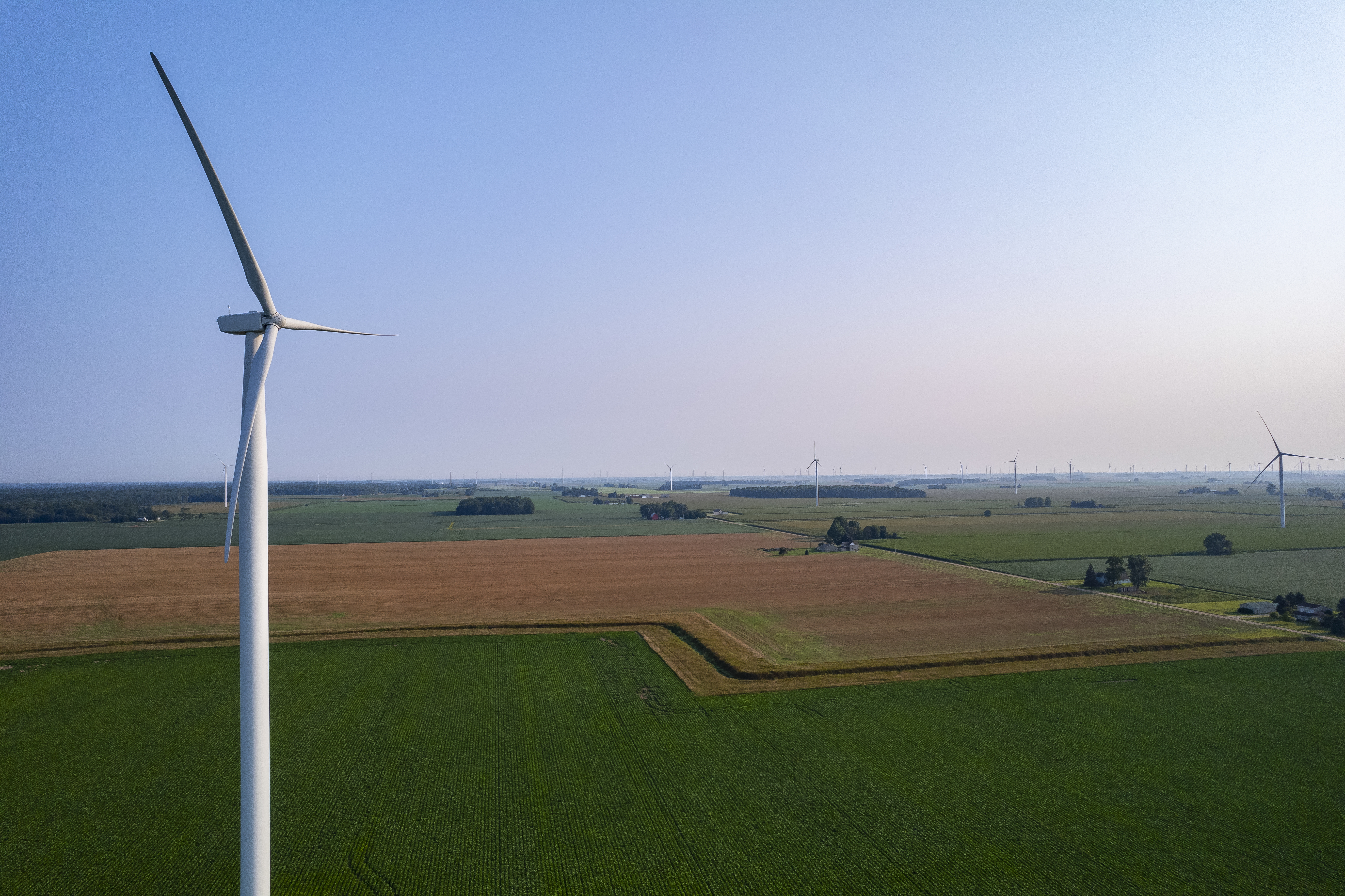
Photo courtesy Lansing Board of Water & Light.
Scenario four evaluates a future in which a large wind project, for which BWL has a signed PPA, does not come into service due to interconnection costs, siting delays, or changes in federal policy related to wind energy. “This scenario reflects the uncertainty associated with renewable generation development and interconnection in the current policy environment,” the IRP noted.
The fifth scenario is operating BWL’s existing baseload generating resources with added storage to meet capacity requirements.
“As far as sensitivities, obviously our first sensitivity is just baseload growth. We look at our region and our economics and what we know is happening with our load growth for a base load case,” she said.
The second sensitivity is a large new load of 45 MW.
The third sensitivity considers the possibility of a data center coming into the utility’s service territory, a new large load of 500 MW, which would “basically double our actual capacity,” Christensen said. The IRP includes a sensitivity tied to a potential data center “because we know there’s potential we may end up with one.”
“The fourth sensitivity was a high penetration of [electric vehicle] build-out and electrification measures, and we did that because we do have a fairly good penetration of that herein Lansing,” she said.
Cultivating Certainty with Large Loads
Christensen said that BWL has had data center proposals, “and each time the energy group has run scenarios on the forecast, both short-term and long-term, on what that would mean to our load.”
BWL’s experience has been that addressing questions about possible sites and other concerns takes a lot of time and energy from its transmission and distribution engineering staff and its planning staff.
Christensen said the utility has updated and matured its large load process in the last year, including mechanisms to get money from prospective customers upfront. “We updated our interconnection process, and updated our rules and regs, and we’re continuing to refine the process next year,” to be flexible and to be prepared, she said.
Meanwhile, Grant PUD is focused on developing policies and processes that protect core customers from new large loads. Frantz said this goal is key for both commissioners and PUD leadership and is grouped under a “growth-management strategy” that aims to tie the IRP and the transmission planning and rate process. “All those things have to work in concert to make sure that we can do that.”
The PUD recently implemented a large load application fee that Frantz said cut the interconnection queue by about half.
Unlike other utilities that saw relatively flat load growth in recent decades, Faulk said SRP has been in a prolonged period of growth.
“We have been building for decades now. We’ve been in a high load growth scenario in Phoenix since the 1980s, where we saw significant growth. And large customers aren’t new to us, either. We’ve been supporting data center customers for the last decade-plus,” she noted.
“What’s different today is the scale and the volume of these customers, where we have single customers knocking on our door that would be 20% of our entire system load at one location.”
SRP adjusted practices that work well “to scale with the volume as well as the size of the customers. Instead of looking at each customer in a serial process, we adjusted just over a year ago to looking at them as a cluster,” Faulk said.
That cluster approach “has allowed us to accelerate and be responsive to all these large customers, but it also allows us to get a lot more certainty faster on which customers are moving forward versus which customers are [still] shopping around,” she noted.
One of the things that SRP customers need is “to know how quickly they can connect and what the cost is, so being able to get that information to them as early as possible allows them to make a decision: ‘Is this a good project for us? Is this the right location to invest?’”
And as SRP shares that information, “we’re asking for certainty also. Put up some significant dollars to show that you’re serious about this so that we can start making decisions on investing in our system to support your load growth,” Faulk said.
When SRP started the cluster process, Faulk said the utility had 24 customers in queue, whose collective demand for energy was close to what its entire system is today.
By the time “we got through this process, we were down to three customers, and it’s still a significant amount of load that we’re looking at trying to meet. But being able to go through that process has been really helpful to get down to the ones that we know are serious and that are going to be our customers in the long run,” she said. Having an adjustable process with some early milestones, “we’re essentially walking along with the customer at these different stages.”