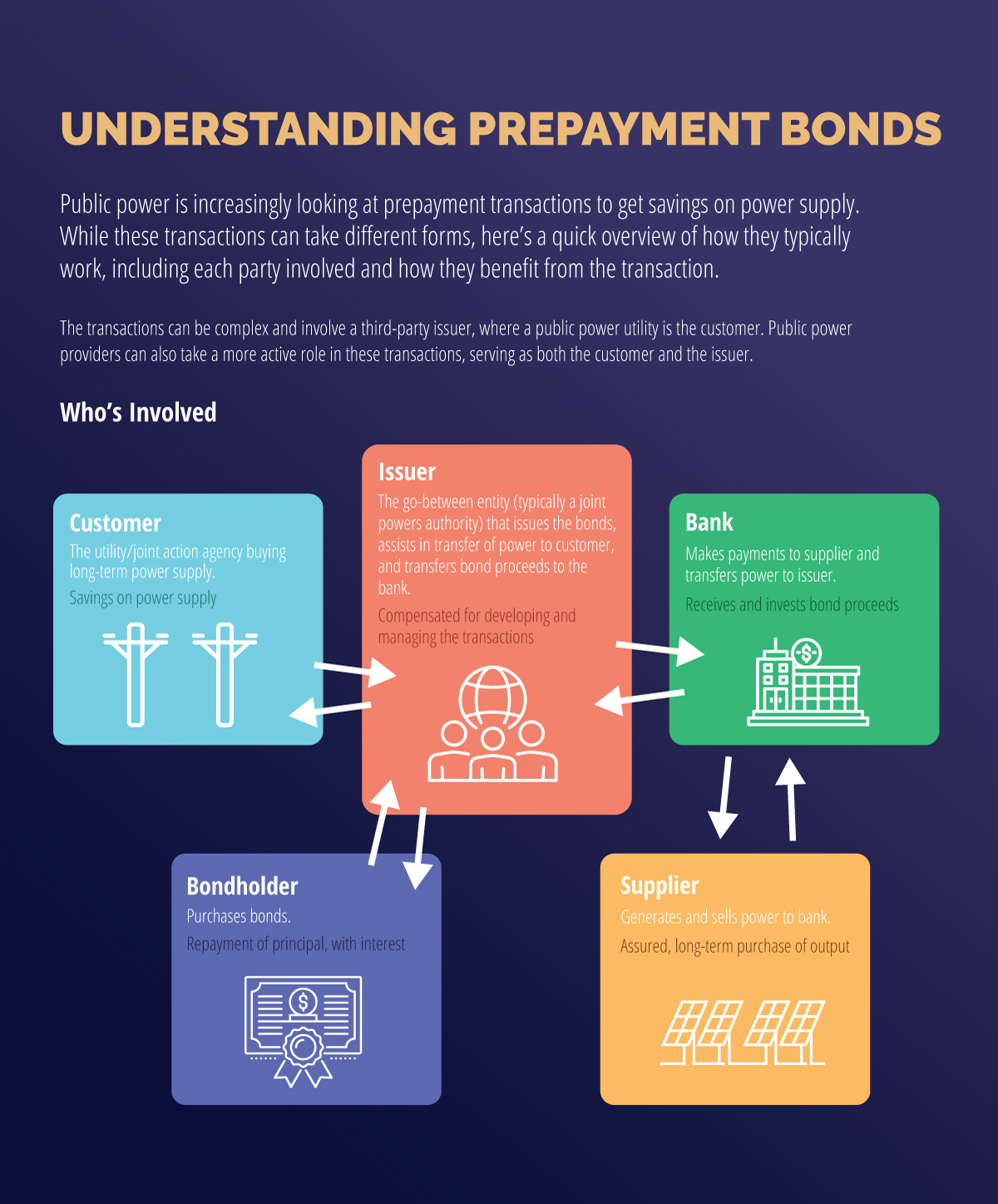
Public power is increasingly looking at prepayment transactions to get savings on power supply. While these transactions can take different forms, here’s a quick overview of how they typically work, including each party involved and how they benefit from the transaction.
The transactions can be complex and involve a third-party issuer, where a public power utility is the customer. Public power providers can also take a more active role in these transactions, serving as both the customer and the issuer.
Who's Involved
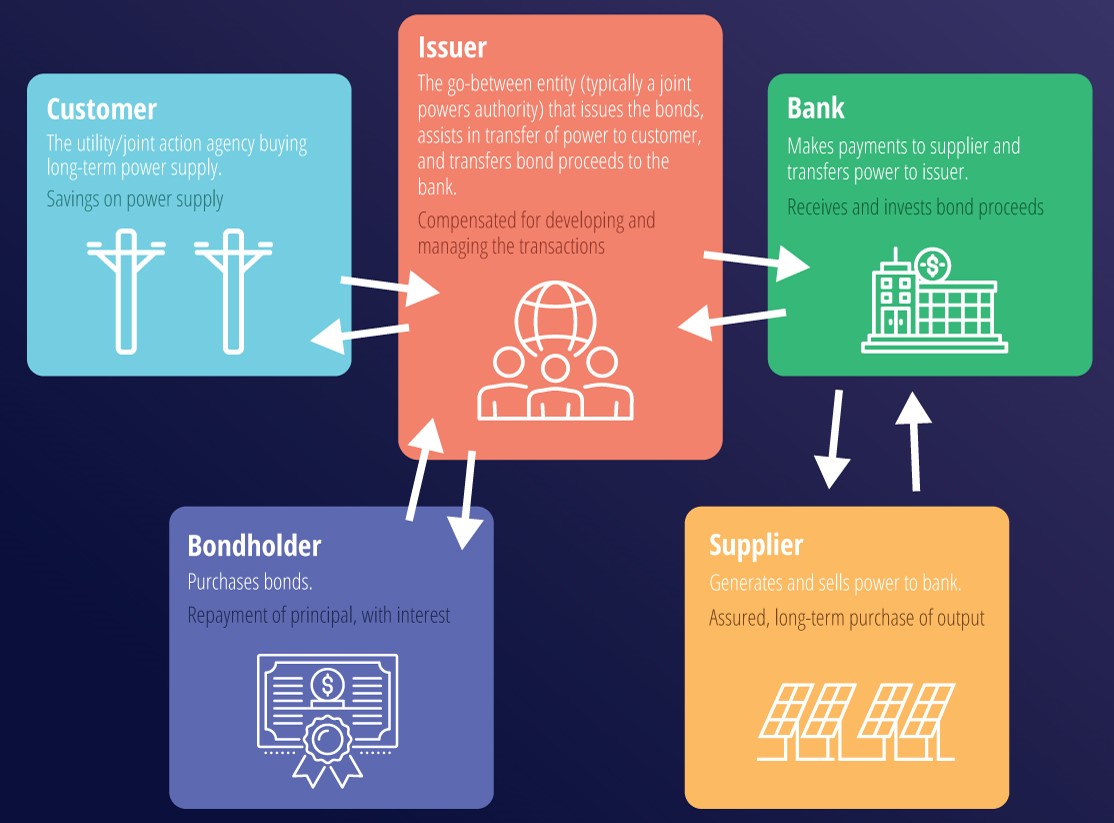
How They Participate and Benefit
 | The customer, usually a utility/joint action agency, buying long-term power supply. Receives savings on power supply. |
 | The go-between entity (typically a joint powers authority) that issues the bonds, assists in transfer of power to customer, and transfers bond proceeds to the bank. Compensated for developing and managing the transactions. |
 | The bank makes payments to the supplier and transfers power to issuer. Receives and invests the bond proceeds. |
 | The bondholder that purchases bonds. Repayment of principal investment, with interest. |
 | The power supplier generates and sells power to the bank. Assured, long-term purchase of output. |