The discourse around using artificial intelligence seems to always come back to making sure to keep the human touch involved — whether in validating input or output, owning decision-making, or taking action. For organizations, the challenge is ensuring that employees have the knowledge and support to use these tools effectively.
AI is often heralded as a productivity aid, but as some leaders push for more adoption across their organizations, they often find it is not yet achieving those results. Part of the issue is readiness and understanding — the AI tools can only help as much as people are able to use them. If people don’t have training that helps them understand how the tools work or that goes deep into how to use the tools well, then they will only use the tools for moderate improvements and simpler tasks.
While many utility jobs require hands-on experience and skills that AI cannot replace, there are still ample opportunities for AI to enhance technical skills and operational understanding. Preparing the public power workforce for the age of AI means finding the right balance of allowing freedom to explore emerging tools and setting guardrails to protect customer information and utility operations. Resist AI and utilities risk falling behind and unintentionally putting customer information at risk. Embrace AI too quickly or passively, and utilities risk investing dollars in technologies that may be redundant or overkill.
Another set of concerns exist around the security and ethics of using AI-based tools for certain functions. As these tools are still getting developed or trained, public power utilities are working to balance implementation and experimentation with safety and security.
As they navigate these challenges, public power utilities are setting policies and guidelines and learning best practices for preparing employees to use AI tools to optimize their workflows while prioritizing privacy and security.
Guidance and Accountability
Recognizing the risk and opportunities associated with AI, leadership at Holland Board of Public Works in Michigan developed AI guidelines for employees centered around generative AI. The process, which lasted from July 2024 to June 2025, included gathering a team of 11 people from across the organization in discussion and research and reviewing policies from other organizations.
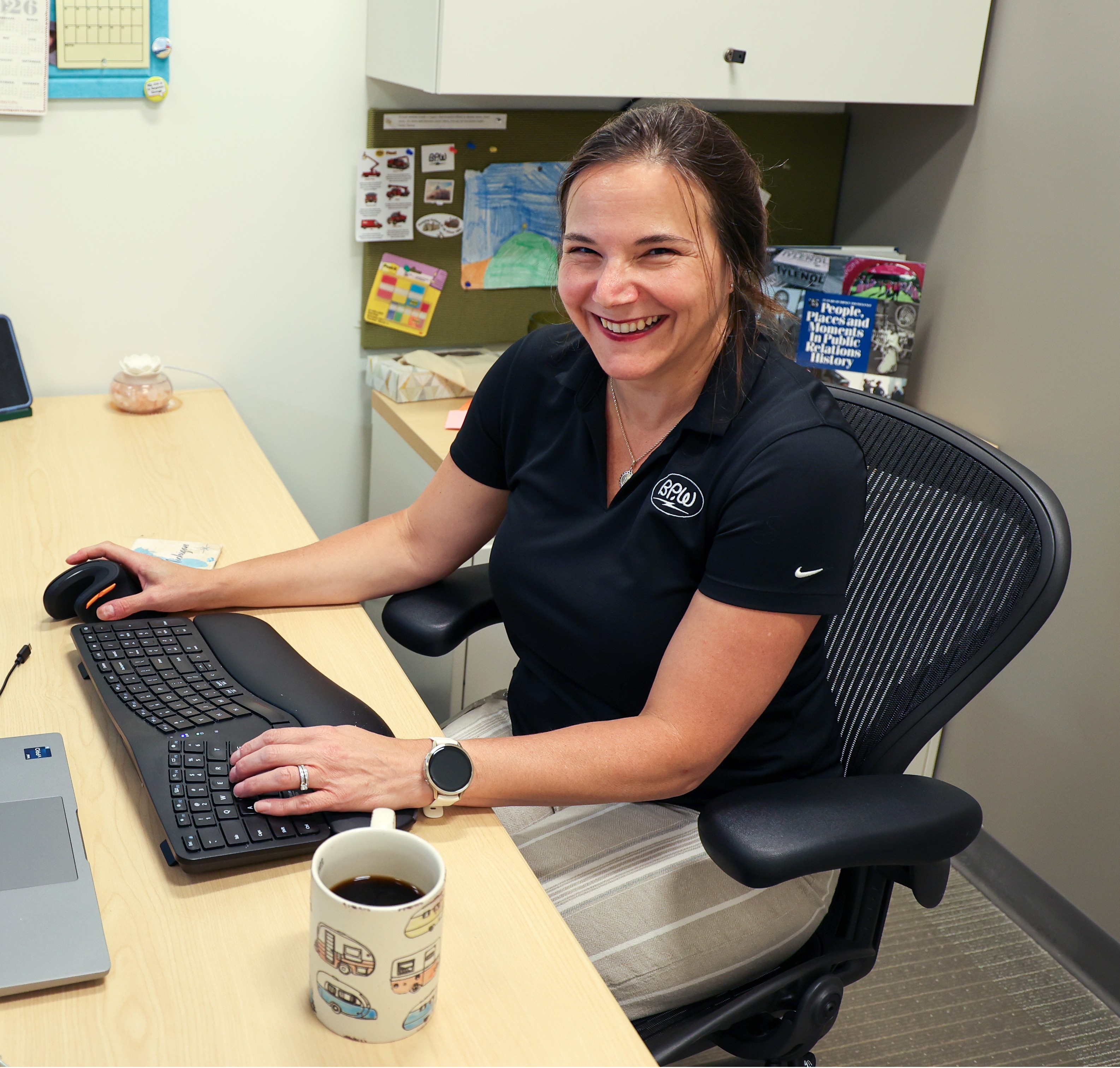
“We didn’t want everyone testing out the latest and greatest model they heard about over the weekend with our equipment and data,” said Julie DeCook, communications manager for Holland BPW. “We did research to understand the risks to privacy, security, and other issues like copyright and bias. It boils down to employee accountability, safety, and integrity.”
“What resonated with us were the policies that were more directive and behavior-based versus being too specific, because we can’t predict the future,” DeCook said. “We also know through experience in creating corporate policy that if it’s too granular and specific, it doesn’t stand up to the test of time.”
The result was a straightforward directive centered around the utility’s core values with guidelines and expectations for employee use.
“We thought it would be important to link to our core values because those are concepts employees understand and have relationships with,” DeCook said.
Although the policy doesn’t specify certain tools, Holland BPW directs employees to use an AI program that operates within the organization's workspace, where the IT department administers settings and controls for safety, security, and privacy for the organization.
The guidelines encourage employees to use AI tools with caution and to always use critical thinking. They remind employees not to use AI for decision-making, and that everything generated by AI requires human review. Employees are prohibited from adding sensitive, confidential, or personally identifiable information into generative AI.
To minimize risks related to privacy, security, and ethics, the guidelines also require employees to understand how the AI tool they want to use works.
“We tell them: If you’re going to pick a tool, make an informed decision, because you’re responsible for what you enter, the tool you use, and whatever it generates,” DeCook said. “If an employee is going to use a tool, we’re holding that employee accountable.”
After noticing employees using AI in their workflows, Greenville Utilities Commission in North Carolina began developing a policy in 2023 by evaluating approaches taken by other companies and utilities. In 2024, the public power utility adopted a policy that guides employees in using AI safely and in compliance with existing regulations.
GUC’s policy dictates that employees cannot solely use AI to make operational or financial decisions or decisions that will have an impact on customers. Employees are required to label all work that was created using AI in any capacity. Additionally, employees are prohibited from sending proprietary or confidential information outside the organization, which includes adding it to AI tools.
“We used the Samsung example, where engineers used AI for designs, and those designs became part of the public domain,” said Andy Anderson, chief administrative officer at GUC. “When we use examples, employees better understand the risk and need to protect the company’s and customers’ data at all costs.”
Additionally, the team incorporated a section on AI into its Acceptable Use Policy two years ago and are working on an updated version. Every employee must review and sign a statement that confirms they have read and will abide by the policy.
Learning As You Go
Using AI tools is voluntary for Holland BPW employees. The utility holds voluntary training to facilitate conversation among its team. Facilitators share ways they have been successful with AI and ask employees what tools might help their workflows.

Regardless of whether they’re interested in AI, all employees go through Holland BPW’s cybersecurity training that features safety and accountability, and its IT department is always available to answer tech questions.
For employees interested in diving deeper into the capabilities of AI, Holland BPW holds workshops to build their skill set and created a Microsoft Teams channel where employees can share tips. Leadership recorded a video that outlines basic Microsoft Copilot training, the utility’s preferred and approved AI tool, to help employees create more effective prompts that generate better content.
“The learning curve is to be patient, allow yourself to experiment, and always read what comes out of AI. Push back and tell it to revise what it generates. Make the tool get the product as good as possible,” DeCook said. “If you’re trying to draft a list of topics, push back to help train the AI, which will help it understand what you want to generate so it will improve over time.”
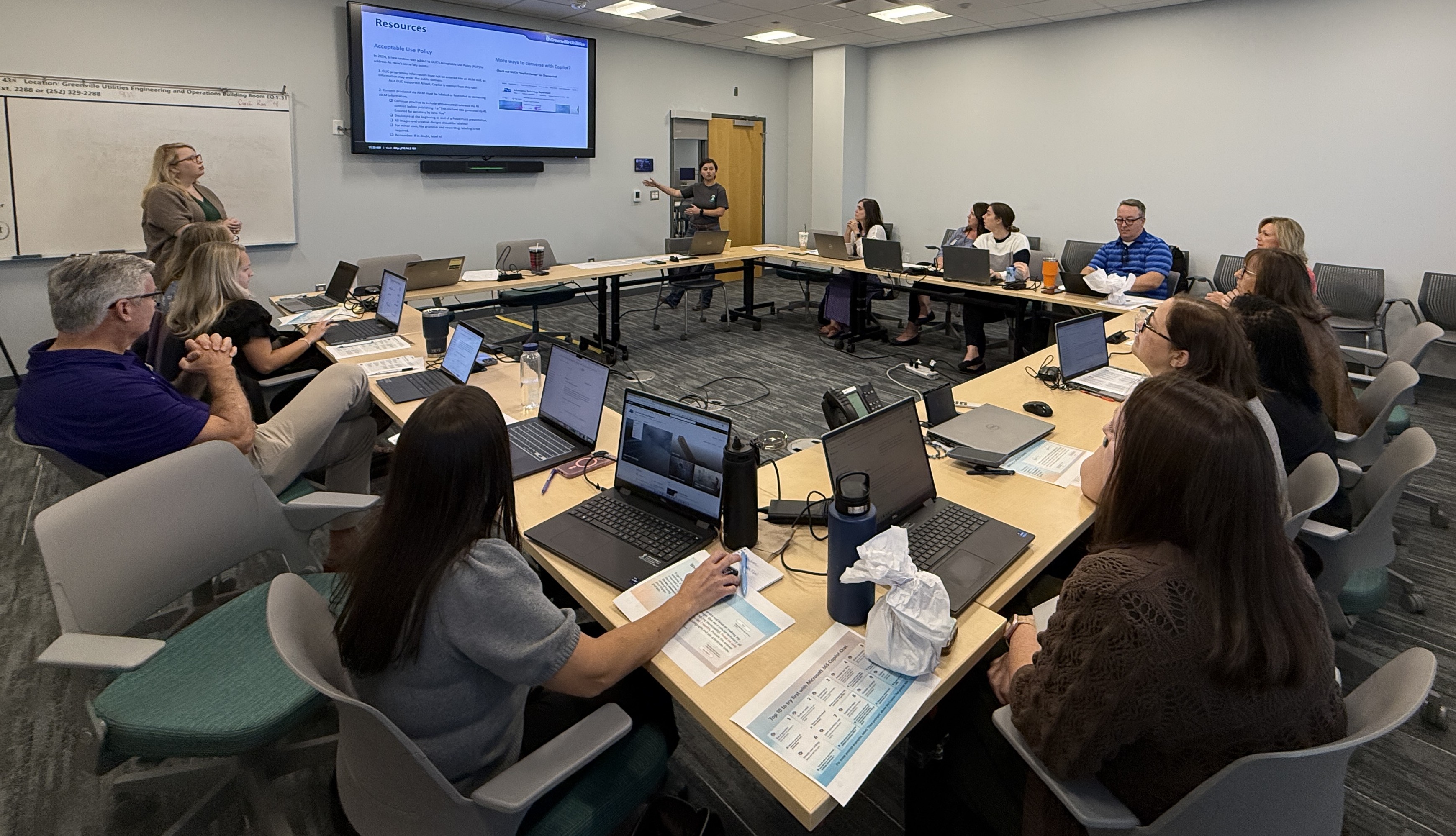
The GUC team attends and presents at utility-related conferences and local events on various business topics to stay updated on trends in AI use. The team recently presented at an AI event at a local university with representatives from the healthcare, manufacturing, and defense industries.
“We’re leaning in and volunteering to speak at events,” said Todd Cannon, director of information technology at GUC. “We’re not AI experts, but it puts us in the front of the room to share ideas and learn from others.”

Meanwhile, AI has proved to be an invaluable tool for the utility as seasoned leaders retire and new employees join the industry.
If a pivotal staff member is nearing retirement, the GUC team develops models to learn and store that person’s industry knowledge. For example, an irreplaceable employee with 30 years of experience recently retired from the utility. GUC captured documents she created over her career and used AI to index and reference that information. Instead of having to sit down and type, employees can use dictation to document their knowledge.
“It’s little things that can make a big difference in cataloging information," noted Anderson.
“Succession planning is important, and having AI to collect and mine 30 years of learning and knowledge for the next employee to leverage is extremely valuable,” Anderson said. “For employees who are central to load management initiatives, having an AI model that helps them more accurately predict the optimal time to implement changes saves millions.”
Using tools to allow for easy access to information that can only be learned over a long career in the industry allows GUC to bring new hires up to speed quickly or to have another reference when they have questions about utility processes and practices.
“We leveraged AI within our IT ticketing system. When someone calls or messages with an issue, the system mines past tickets and presents possible fixes based on history,” Anderson said. “We depend heavily on interns for our help desk, and the AI tool helps them make decisions you’d normally expect of an IT professional with many more years of experience.”
Experimenting the Right Way
In California, Sacramento Municipal Utility District created an AI Governance Council in 2024 that includes executives from various departments, including IT, legal, human resources, cybersecurity, and its diversity and inclusion group. SMUD also developed a roadmap, AI+HI, that outlines the public power utility’s AI vision, guiding principles, and an adaptable path forward centered on human intelligence.
SMUD blocks all AI tools except those that go through its governance process to help the utility understand and control where data is being used. Once a tool is approved, it’s added to a register, so SMUD has visibility into which tools and models employees are using.
“We look to see if it’s an appropriate use of AI, and then we put in controls we need,” said Michael Champ, director of specialized enterprise initiatives at SMUD. “We start with a strong control framework and adjust it over time to add appropriate flexibility as we better understand the AI tool’s behavior, capabilities, and limitations.”
The council meets monthly to discuss potential AI opportunities and review current AI use cases to ensure each aligns with cybersecurity and ethics standards. The group created a risk and control matrix that identifies the risk associated with various AI tools and presents controls to avoid those risks.
SMUD leadership provides high-level AI training to employees about authorized and unauthorized uses of AI. The training reinforces policies, such as not to upload data into a public tool, and provides tips for employees to watch out for bias and hallucinations. The training also walks employees through how to use SMUD GPT, which is a customized and trained tool for the utility.
The team holds workshops, town halls, and presentations to train staff. For example, it recently held a demonstration on ways field employees could use AI, such as in seeking health and safety advice or for translation assistance.

“Just because you use a tool doesn’t mean you’ve thought of all the ways you can use it in your job,” Champ said. “Training helps them think of more ways they can use it. We talk about what they do in their job and how it can be optimized.”
Once SMUD implements a tool, they lean on employees to help test it. For example, AI has repeatedly proved it’s unable to do mathematical analysis and accurately cite references — inadequacies only learned through employee trial and error.
“We need employees to use tools and make mistakes in safe ways that aren’t high impact. That’s how you learn boundaries and capabilities,” Champ said. “Every day we’re learning the ways AI can make mistakes and how we can adjust our approach to get better results.”
Similar to safety shares, SMUD holds “AI shares” to encourage employees to talk about what might have gone wrong with their AI use. Champ has found that people can be reluctant to share the ways they use AI and even more reluctant to share the errors they find.
“To get people comfortable talking about AI use takes ongoing management to change those relationships,” Champ said.
When the message of openness and experimentation comes from the top down, employees are more likely to share their own experiences. If members of leadership share their own experiences with AI, including failures and successes, it builds trust that employees can do the same.
“The message needs to be ‘I’m not leading you in this new thing; we’re all in this together and learning,’” Champ said. “Some employees might be ahead of me in the process, and we’re doing it together.”
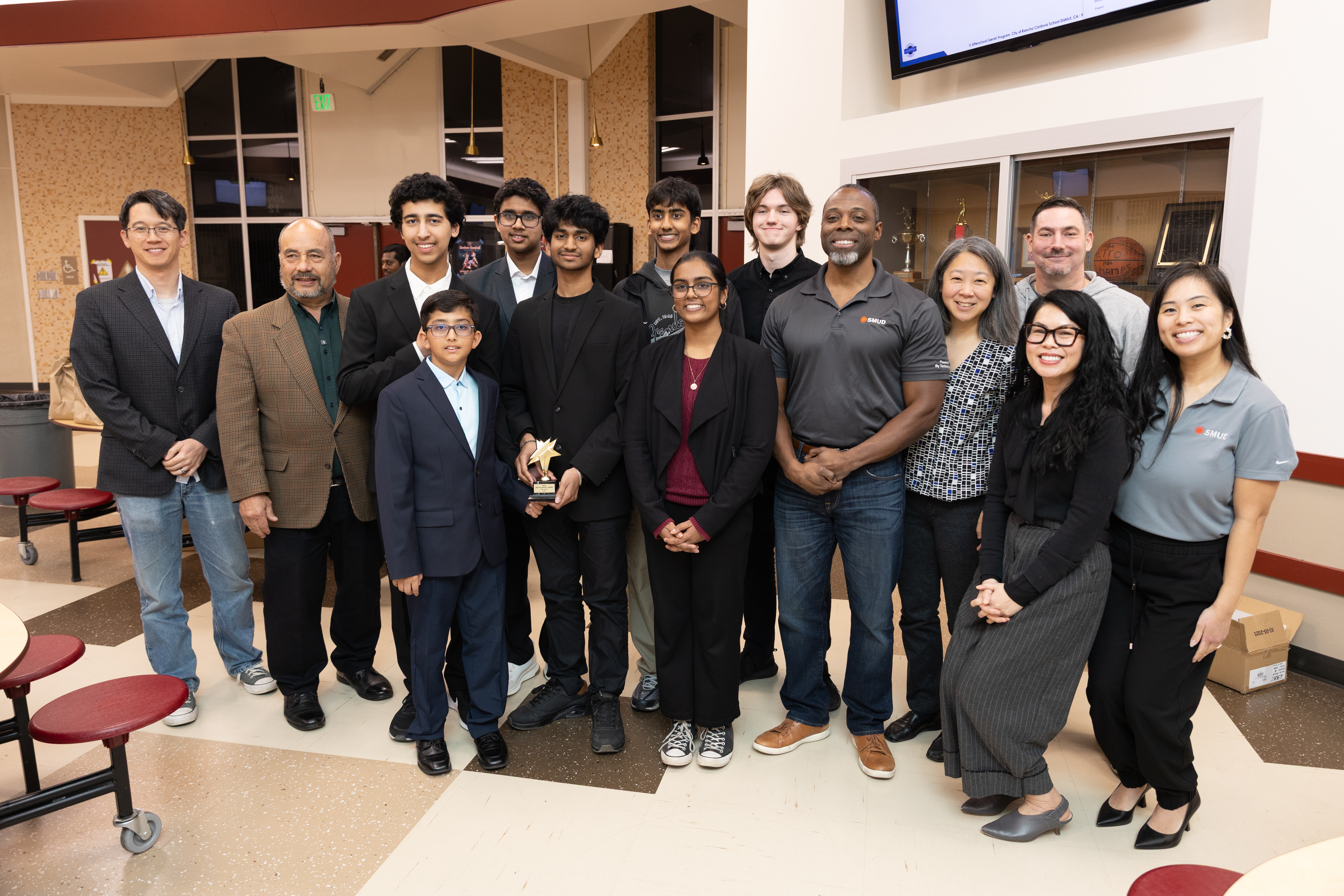
Alongside its strong internal efforts, SMUD supports community-based AI learning, including backing a local high school student showcase, where students presented AI agents they developed during a 10-week program. SMUD presented an award to a team project that focused on helping residents save energy and reduce costs.