In a recent interview with APPA, Randy Trimble, Executive Director of Energy Delivery for Texas public power utility Bryan Texas Utilities, provides details on a training center for line workers completed earlier this year, highlighting the key role utility line workers played in designing the hands-on training area of the facility.
In an episode of APPA’s Public Power Now podcast, Trimble noted that BTU’s then-general manager Gary Miller “gave the project his full support from the beginning and understood the long-term value of what we were really trying to accomplish.”
At the same time, “we also had an existing building become available on our transmission and distribution campus.” It had been used as a warehouse for distribution material for many years, “but when we expanded the campus, that material was relocated to a new building, so because of that, we had a building that had about 900 square feet of office space, which we were able to convert into a classroom.”
Trimble said his role in the effort was helping to establish and support the overall vision for the project. James Bodine, BTU’s Division Manager of Distribution, played a very important role in working with an architect to get the classroom part of the project completed.
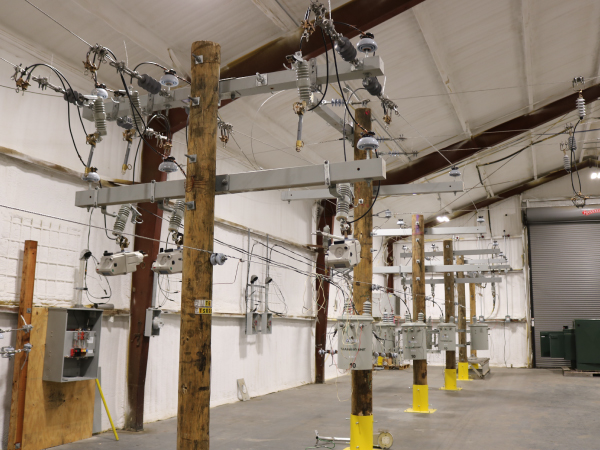
“There's an adjoining 5,000-square-foot warehouse, and that actually became our hands-on training area,” Trimble said.
BTU linemen played a central role in designing the layout for most of the hands-on area. Mark Telg, BTU’s overhead construction manager, “worked very closely with our linemen and made sure they had what they needed to pull everything together.”
BTU linemen “are very proud of the training center and they have every right to be. They did a phenomenal job,” Trimble said.
In discussing the types of classes available at the training center, he noted that initially “it was really designed to give us quite a bit of flexibility, really looking at first-year apprentices as they come through the front door through our experienced journeyman all the way to our lead lineman.”
The schedule for 2027 includes troubleshooting; journeyman apparatus and leadership training; regulators, reclosers and capacitors; transformers; transformer connections, both overhead and underground; and journeyman refresher training covering transformers, metering, regulators, capacitors and other equipment, he noted.
“What we were able to do was provide various equipment-specific technical training and troubleshooting and refresher training and actually even leadership development again to develop a lot of our newer linemen who in the next few years will naturally transition into more of a lead role.”
Trimble added: “We can also use this for our own internal training, including we have standard operating procedures or our SOPs, so we can train on that. We can train on work practices that are specific to our system. To me, that's one of the biggest advantages of having our own facility. If we recognize a training need, we have the classroom and I would say the functional hands-on area available to address it and to perform that training.”
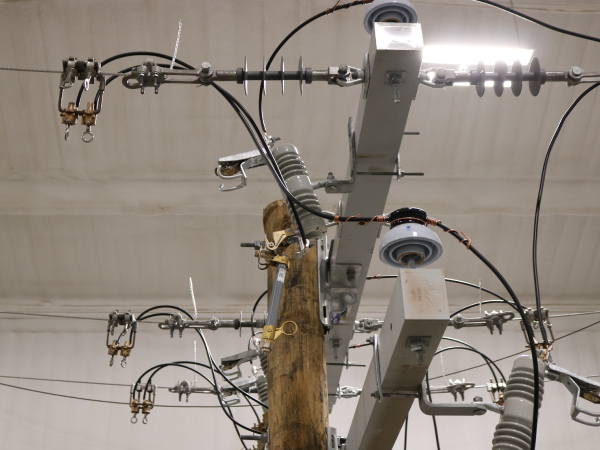
Because the equipment is operational, “a class on regulators and reclosers or capacitors, for example, doesn't have to really just stop in the classroom. Once you get through with the classroom work, we can go next door and actually work with that equipment and see how it works. So that's really what we wanted to do.”
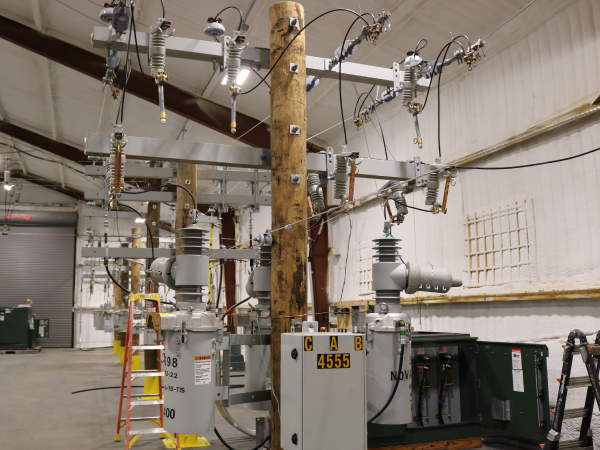
The hands-on area is a 5,000-square-foot room configured as a functional three-phase distribution system – not simply a mock-up. One of its key safety features is that it operates at 120/208 volts. This allows line workers to operate equipment, troubleshoot problems, and practice procedures in a controlled environment while significantly reducing the electrical hazards.
There are roughly 25 poles with crossarms with 15kV-class insulators, phase conductors and several underground primary risers.
“When a lineman or an apprentice walks into the room, it looks very much like the type of system they would see in the field today,” he said.
There are capacitor banks, a regulator bank, operated switches, electronic and hydraulic reclosers, TripSaver reclosers, pad mounted switch gear, a primary metering station, instrument-rated metering, and several different metering configurations.
The equipment “operates the way our linemen would expect to find it in the field, but within a reduced voltage training environment,” he said.
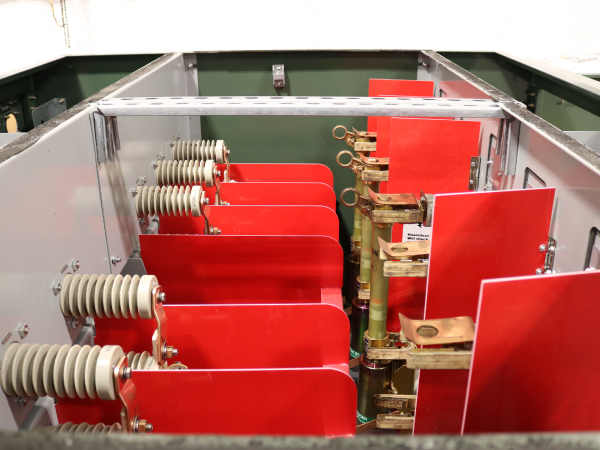
“The cool thing to me is our linemen figured out a way to fit all of that into this 5,000-square-foot building and make it look and function just like a real distribution system.”
The facility was built to support line workers at all experience levels.
BTU has an established apprenticeship program, Trimble noted, but the utility identified a gap in refresher training and instruction on new materials and work methods for experienced line workers.
“So really what we decided was that training doesn't stop whenever someone completes their apprenticeship program. We identified the fact that we needed a way to develop employees who are new to the trade, as well as experienced line workers who can benefit from and actually desire continued training. As equipment, technology and work practices change, there are skills that employees may not use often enough to stay proficient without periodic training.”
Knowledge transfer also comes into play. “We have employees with decades of experience working alongside people who are relatively new to this trade,” he noted.
Trimble said bringing experienced and newer workers together creates opportunities for the seasoned to pass along knowledge that isn't necessarily captured in a manual or procedure.
That is especially important “as we prepare for our experienced employees to retire. Truly, we can't just replace the number of people who leave. We really have to find ways to replace and transfer their experiences and their knowledge. So having our own training facility really gives us another tool to do that deliberately and consistently.”