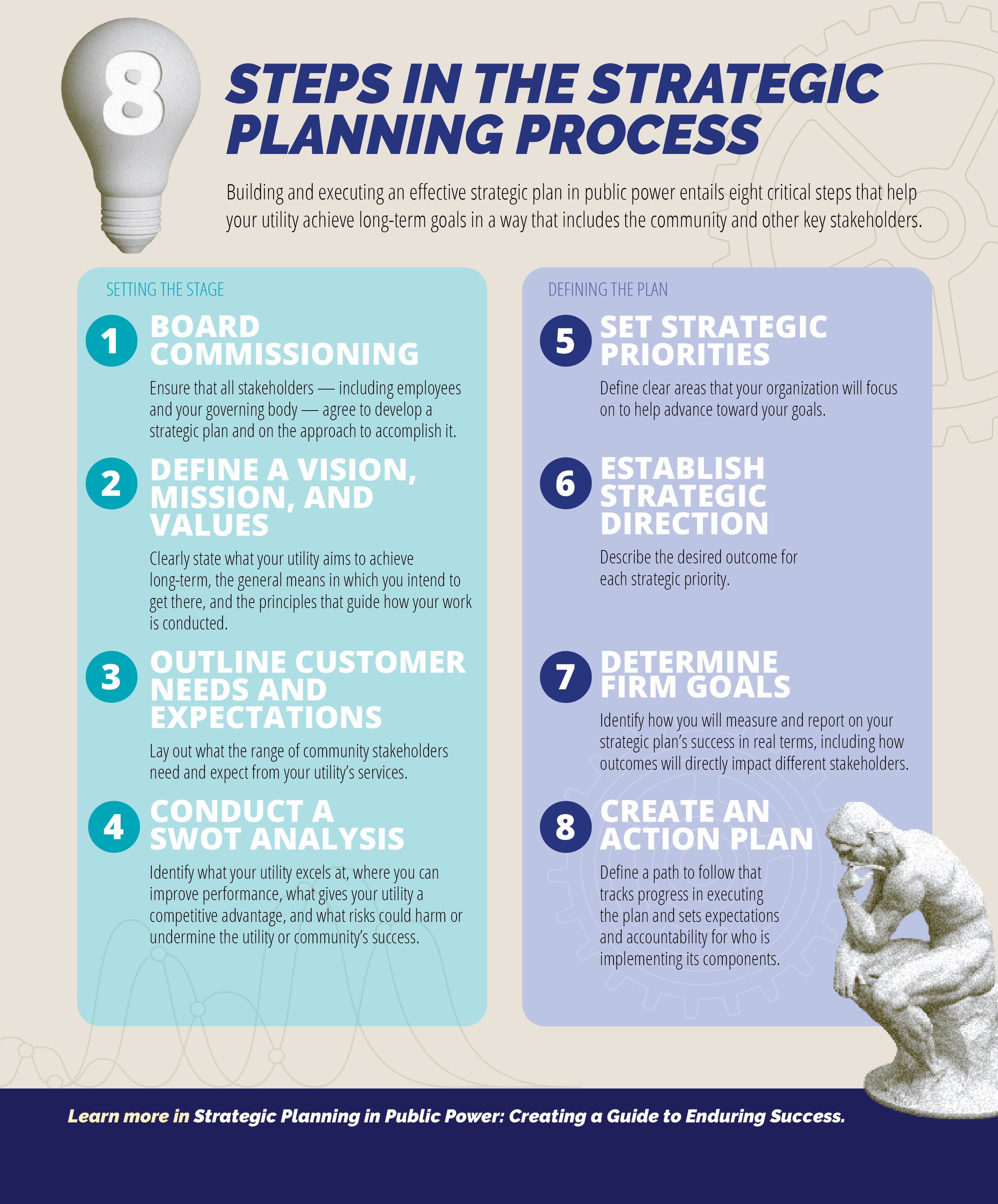
Building and executing an effective strategic plan in public power entails eight critical steps that help your utility achieve long-term goals in a way that includes the community and other key stakeholders.
Setting the Stage
 | Board Commissioning: Ensure that all stakeholders — including employees and your governing body — agree to develop a strategic plan and on the approach to accomplish it. |
 | Define a Vision, Mission, and Values: Clearly state what your utility aims to achieve long-term, the general means in which you intend to get there, and the principles that guide how your work is conducted. |
 | Outline Customer Needs and Expectations: Lay out what the range of community stakeholders need and expect from your utility’s services. |
 | Conduct a SWOT Analysis: Identify what your utility excels at, where you can improve performance, what gives your utility a competitive advantage, and what risks could harm or undermine the utility or community’s success. |
Defining the Plan
 | Set Strategic Priorities: Define clear areas that your organization will focus on to help advance toward your goals. |
 | Establish Strategic Priorities: Describe the desired outcome for each strategic priority. |
 | Determine Firm Goals: Identify how you will measure and report on your strategic plan’s success in real terms, including how outcomes will directly impact different stakeholders. |
 | Create an Action Plan: Define a path to follow that tracks progress in executing the plan and sets expectations and accountability for who is implementing its components. |
Learn more in Strategic Planning in Public Power: Creating a Guide to Enduring Success.