
Snohomish County PUD recently hosted policymakers, planners and energy stakeholders at its Arlington Clean Energy Campus for a first-hand look at the Washington State public power utility's latest investment to grid modernization, battery storage and clean energy infrastructure.
The event was organized in partnership with Clean & Prosperous Washington, a clean energy advocacy group, and included participation from Pacific Northwest National Laboratory (PNNL), local governments, state agencies and energy industry representatives.
The tour highlighted the utility's Arlington Battery Energy Storage Systems, including its newly developed 25-megawatt battery project in partnership with Ameresco, and also featured its existing 1-megawatt battery, microgrid and community solar project.
Attendees explored how the various assets work together to enhance grid reliability, support clean energy integration and prepare for growing electricity demand.
Presentations from PUD staff focused on the planning, permitting and infrastructure investments required to bring emerging energy technologies online. Discussions emphasized that battery storage is one component of a broader resource strategy that also includes conservation, demand response, transmission expansion and new generation resources.
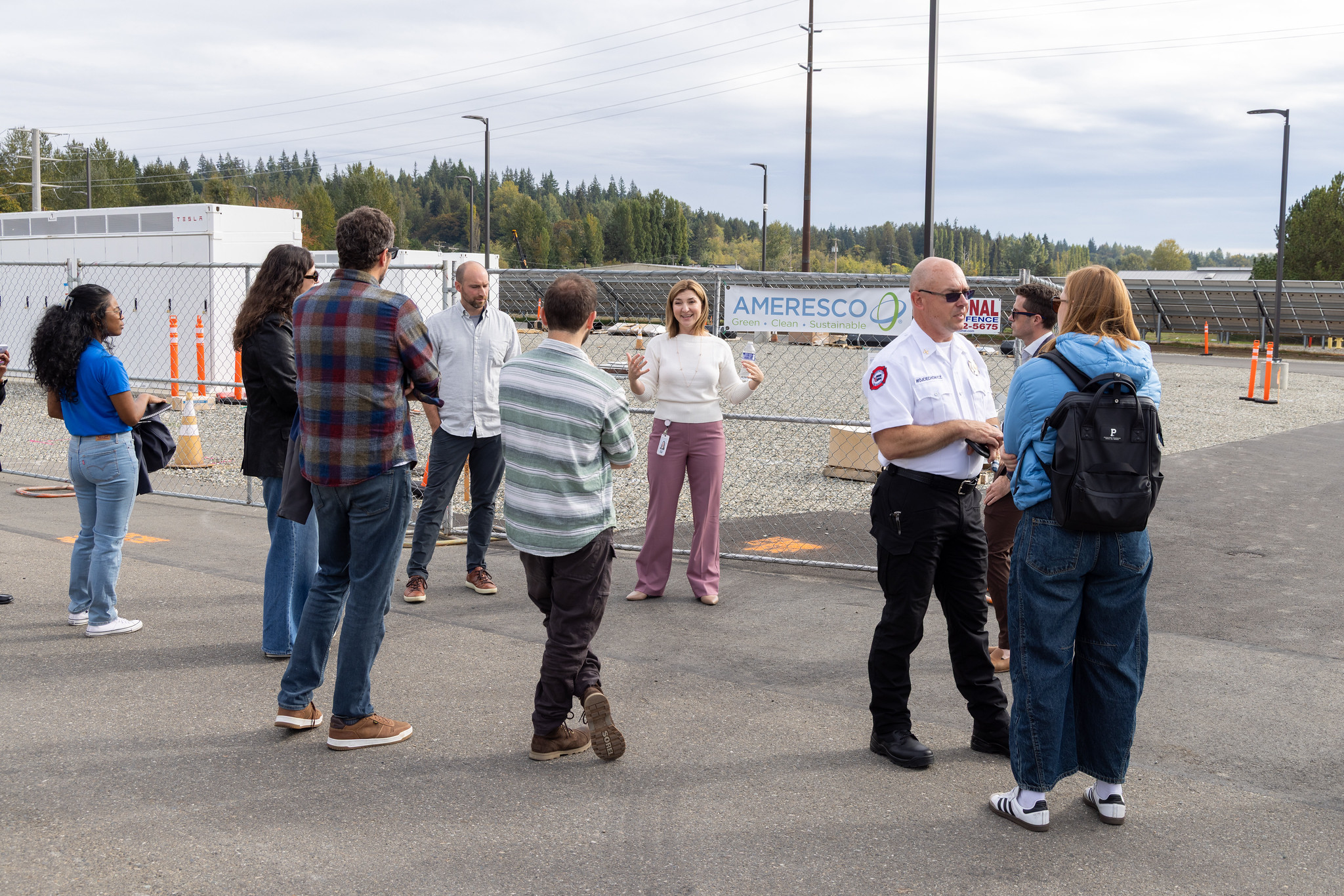
The event also served as a forum for discussing siting, safety standards, regulatory considerations and collaboration between utilities, local governments, planners and first responders. PUD leaders positioned the project as a real-world example of the practical decisions utilities face as they work to maintain reliability, affordability and increasingly clean energy supplies.
“Seeing these projects up close gives policymakers a better understanding of what it takes to bring new technologies from concept to reality,” said Kim Johnston, PUD Chief Government Relations & Strategy Officer. “The PUD values the opportunity to engage directly with decision-makers, share lessons learned and help inform policies that support innovation, reliability and long-term energy affordability.”