The cost of delivering electricity through the grid varies depending on how much people are using at a given time. Higher use, or demand, is associated with higher costs to generate, transmit, and deliver energy to customers.
Time-of-use, or TOU, rates are a simple type of time-varying rate that aim to better align the price of electricity with the cost to serve as it changes throughout the day. As of 2024, more than 620 utilities, including 230 public power utilities, offered a TOU rate.
Structure
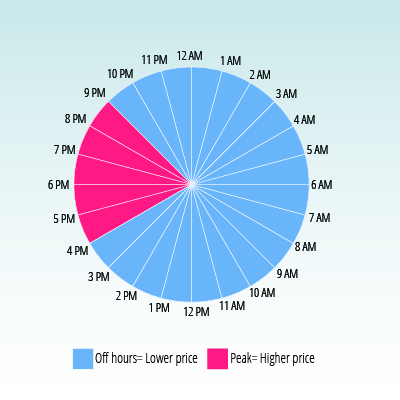 | A typical TOU rate has distinct peak and off-peak periods, where the price is higher during peak hours, often weekdays during the late afternoon/early evening, and a lower price off-peak period that includes other hours when use is often lowest. |
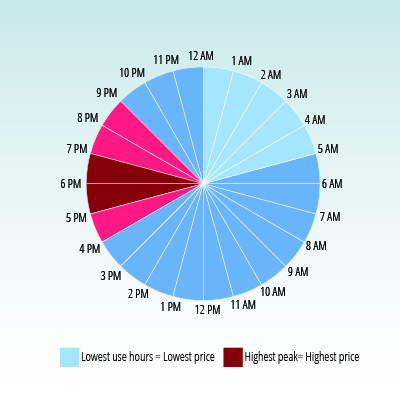 | Some TOU rates include additional tiers, such as for the highest peak times or an even lower price for the lowest usage hours, such as late night. TOU rates can also vary between weekdays and weekends, or between seasons. |
Pros of TOU Rates
- Customers who can shift use to off-hours can reduce their electric bill.
- When customers shift usage away from peak periods, peak demand goes down, enhancing grid resilience and reducing utility costs to serve.
| On average, TOU rates see a 3% reduction in on-peak usage and a 1% increase in off-peak use. |
- Customers with technologies such as smart appliances, electric vehicles, or energy storage can program or manage these assets to shift usage from the grid to lowest cost hours.
Cons of TOU Rates
- Customers who are unable to shift their usage to off-hours might see their electric bills increase.
- Requires utility to do customer education to adapt to the change.
| Allowing customers to opt out might help them avoid higher bills. |