
Edwin Porter has served as the executive director of infrastructure for the city of Hamilton, Ohio, since 2021. He first joined the public power utility as a supervising mechanical engineer in 2017. He previously worked at CH2M, where he specialized in engineering consulting around critical infrastructure projects. Porter holds a Bachelor of Science in mechanical engineering from the University of Cincinnati and is a 2025 recipient of the Mark Crisson Leadership and Managerial Excellence Award from the American Public Power Association. Under Porter’s leadership, the city of Hamilton won APPA’s E.F. Scattergood System Achievement Award in 2022.
What brought you to your career in public power?
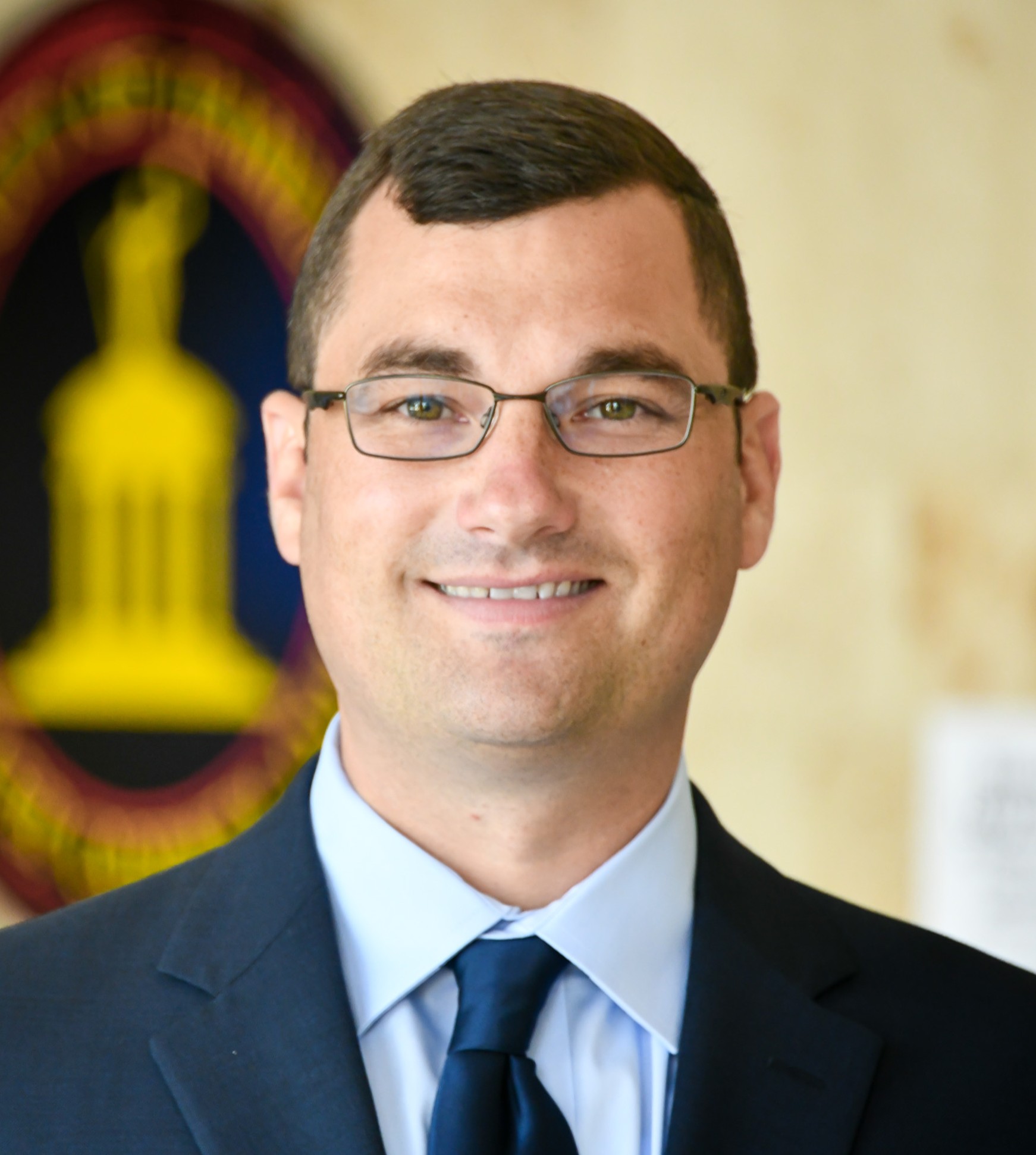 I spent the first 10 years of my career in engineering consulting and was educated as a mechanical engineer. That experience provided me with the opportunity to work on a diverse set of projects across a range of innovative companies, which I really enjoyed. After having a conversation with the Hamilton infrastructure leadership team, I was blown away by the complexity of the work that the city was responsible for. It was clear that the team was driven by the importance of their work and how much it directly supported the community. The position offered me new opportunities to grow and aligned with my values as well.
The number one thing I enjoy most about public power is serving people. I put my heart and soul into everything that I do and working in public power gives me great satisfaction, because I know that the outcome of my efforts is directly benefiting others.
What has been your leadership philosophy at the city of Hamilton?
I believe that every individual contributor has their own talents, which is a principle all of Hamilton’s leadership follows. We work to remove barriers and empower each individual to contribute at their highest level while defining ahead of time what the end product should look like and how each team member’s specific talents and experience can work toward that shared goal. We’ve found this goes a long way for delivering exceptional results.
What kind of improvements has Hamilton implemented under your leadership, and how have any tech upgrades helped?
In terms of reliability, our most impactful program has been a comprehensive tree-trimming initiative. Hamilton has a significant overhead distribution system, and we’ve spent the past 10 years trimming around that system circuit by circuit. This program reduced outages from drooping and broken branches, wind, fallen trees, and wildlife. Other reliability upgrades have included SF6 breaker implementation, lead cable replacement, and direct buried cable replacement.
We’ve also overseen the implementation of a drone program to inspect distribution and transmission lines, pole conditions, and vegetation issues. This program has saved time and money and shortened the recovery time when there are outages. Five members of the Hamilton team have gone through extensive training and licensing to support this initiative.
On the grid modernization side, the team started with data collection through devices such as lidar, and we used that information to identify and prioritize the most impactful projects, such as SCADA and outage management system upgrades and improvements to our underground network. In addition, our team invested in peak-shaving assets to support the system and lower consumption during peak demand hours.
Hamilton also built a new substation to support our enterprise park, and the vast majority of the construction was performed by Hamilton employees. Our new substation, along with our underground duct bank, gave us the reliability needed to support existing industrial customers while attracting new customers to the complex. On the safety side, we’ve developed a strategy to temporarily adjust the arc flash safety settings in the protective relaying. These settings lower the trip threshold in the circuit when work is being completed in the system.
Our team has implemented several initiatives that are aimed at improving customer service. One has been developing an electrical outage map and accompanying text notifications. We fully understand that an interruption to electric service is frustrating and undesirable, and it became even more frustrating when our community members would call us and experience call drop due to high volume. Bill Hudson, our director of utility operations, and Ken Carrier, our director of information technology services, partnered to develop outage communication tools. Now, when there’s an outage, our customers who choose to sign up for communications are notified via text that there’s an outage at their property. This debuted alongside an outage map that shows predicted and known outages. A lot of the time, people just want to know that we’re aware of the outages and working to get everything restored.
What are you proudest of having achieved at Hamilton so far?
I’m especially proud of how our team has worked to provide the highest level of service possible and how this earned us both the Diamond designation under APPA’s Reliable Public Power Provider program as well as the E.F. Scattergood System Achievement Award. We’re foremost proud of the work we’ve put into our system and the quality of service that allowed us to earn those awards, and how that work has supported Hamilton itself.
I’m also proud of the work that has gone into building financial stability across all of Hamilton’s utilities. There needs to be a balance between operations and maintenance cost, capital investment, debt service, fund balances, and utility rates. While Hamilton is strategically focused on moving toward rate plans that support the cost of service, we’ve also established the necessary support for our capital projects. That’s going to provide the expected level of service now and for Hamilton’s subsequent generations. Looking to the future, my goal is to support continuous organizational improvement through developing a strategic plan, executing that plan, checking the results of that execution, and adjusting as necessary so our team can continue providing the highest level of service at the most economical rate.