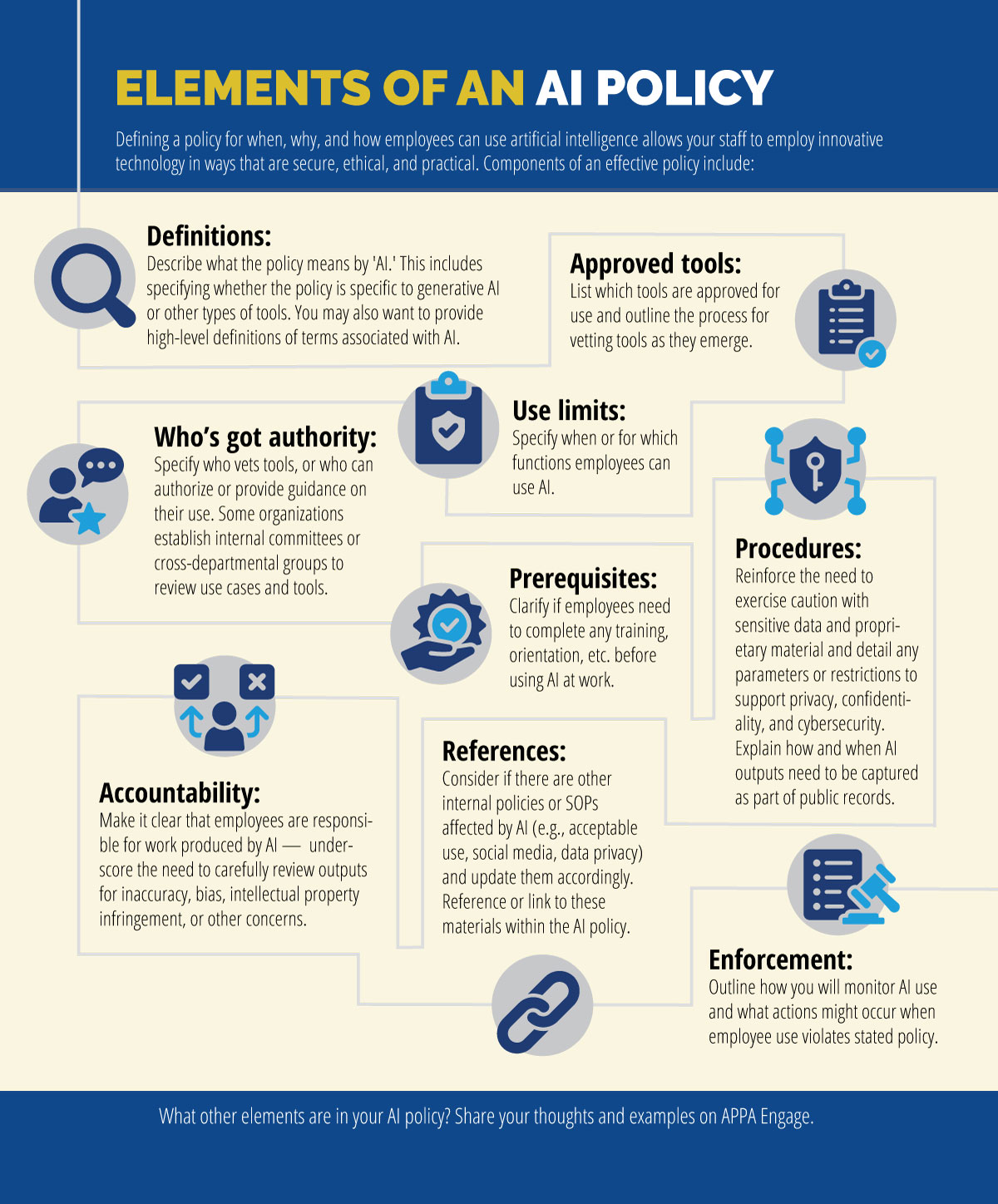
Defining a policy for when, why, and how employees can use artificial intelligence allows your staff to employ innovative technology in ways that are secure, ethical, and practical. Components of an effective policy include:
 | Definitions Describe what the policy means by 'AI.' This includes specifying whether the policy is specific to generative AI or other types of tools. You may also want to provide high-level definitions of terms associated with AI. |
 | Approved tools List which tools are approved for use and outline the process for vetting tools as they emerge. |
 | Use limits Specify when or for which functions employees can use AI. |
 | Who’s got authority Specify who vets tools, or who can authorize or provide guidance on their use. Some organizations establish internal committees or cross-departmental groups to review use cases and tools. |
 | Prerequisites Clarify if employees need to complete any training, orientation, etc. before using AI at work. |
 | Procedures Reinforce the need to exercise caution with sensitive data and proprietary material and detail any parameters or restrictions to support privacy, confidentiality, and cybersecurity. Explain how and when AI outputs need to be captured as part of public records. |
 | References Consider if there are other internal policies or SOPs affected by AI (e.g., acceptable use, social media, data privacy) and update them accordingly. Reference or link to these materials within the AI policy. |
 | Accountability Make it clear that employees are responsible for work produced by AI — underscore the need to carefully review outputs for inaccuracy, bias, intellectual property infringement, or other concerns. |
 | Enforcement Outline how you will monitor AI use and what actions might occur when employee use violates stated policy. |